

Home guide
HDB Ceiling Leak: Who Pays and What to Do
How HDB splits ceiling leak repair costs between neighbours, the Town Council and the Goodwill Repair Assistance scheme, and the order to fix things in.
- A wear-and-tear leak between flats is shared: under GRA, HDB pays 50% and each owner pays 25%.
- If upstairs renovation caused the leak, the upper owner pays the full cost.
- Roof and external wall leaks go to the Town Council, which bears the full cost.
- Fix the source first, let the ceiling dry, then repaint, or the stain comes back.
 Homey Furnishing 9 min read
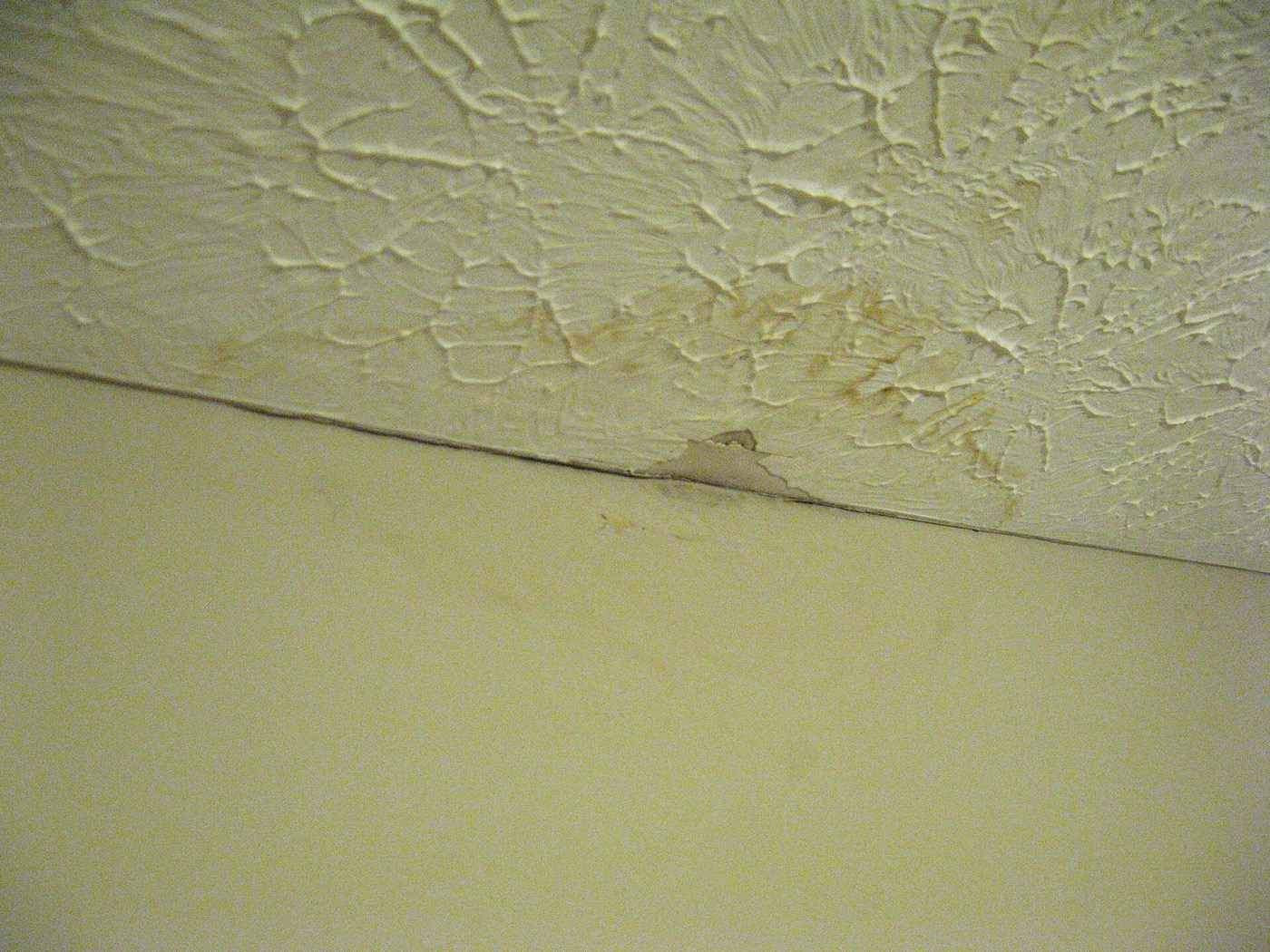
Photo: Ed! (Photography Gallery), CC BY-SA 3.0, via Wikimedia Commons.
A brown ring appears on your toilet ceiling, and it darkens every evening around the time the family upstairs showers. For an HDB ceiling leak, who pays depends on where the water comes from. A leak through the floor slab between two flats is the joint responsibility of the upper and lower owners, who share the repair cost. If the leak comes from renovation works in the upper flat, the upper owner pays in full. A leak from the roof or another part of common property goes to the Town Council. For wear-and-tear leaks between flats, HDB's Goodwill Repair Assistance (GRA) scheme pays 50% and the two owners split the other 50%.
Get the order of work right as well. Fix the source first, let the slab dry, and only then repaint your ceiling.
Signs of a ceiling leak
HDB describes ceiling leaks as water from the flat above coming through the concrete floor slab, usually because the waterproof membrane and screed in that floor have worn out. It is common in older blocks and typically happens under toilets and bathrooms. HDB also warns that untreated leaks can damage electrical items and cause mould (HDB, ceiling leaks).
What you will usually notice:
- a yellow or brown ring on the ceiling that grows over weeks;
- paint bubbling, peeling or turning powdery;
- drips or damp patches after the upstairs toilet or kitchen is used;
- black mould spots around the stain;
- water tracking down the wall from the ceiling corner;
- a ceiling light or exhaust fan that trips or has water in the cover.
If water is near a light fitting, switch off that circuit at the distribution board and keep it off until a licensed electrical worker has checked it.
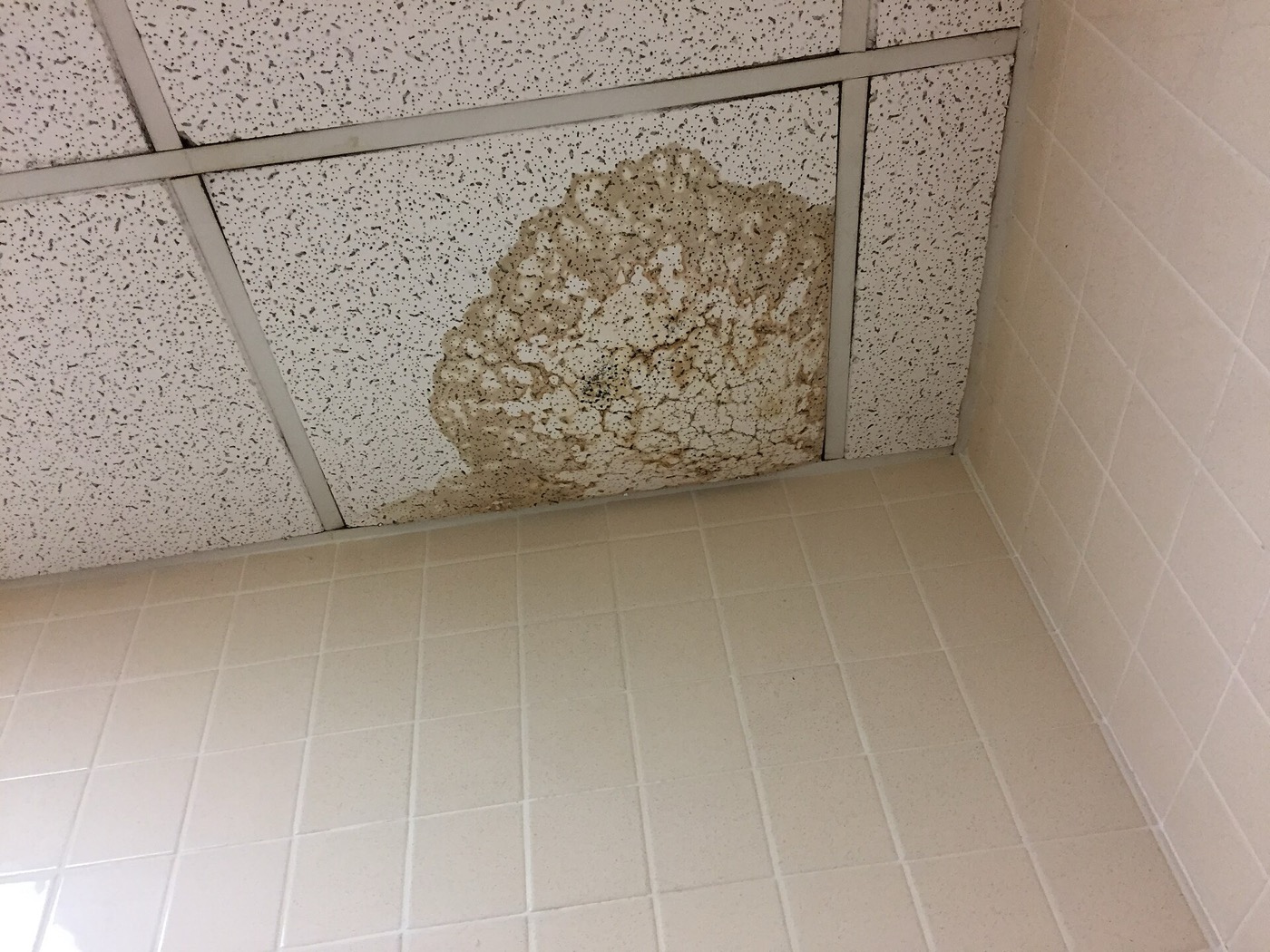
Photo: Atomicdragon136, CC BY 3.0, via Wikimedia Commons.
Finding where the water comes from
Location tells you a lot before anyone opens a tile.
- A stain under the upper flat's toilet or bathroom usually means worn floor waterproofing, or water getting in around the floor trap and waste pipe.
- Under the upper flat's kitchen, check how they clean. HDB notes there is no waterproofing membrane under kitchen floor tiles, so washing the kitchen floor with a hose instead of mopping can send water down (HDB).
- A stain along a pipe run points to a leaking joint or a choked pipe backing up.
- A stain in a top-floor flat, or one that appears only after heavy rain, suggests the roof or external wall, which is common property.
HDB's first step is simple. Approach your upper-floor neighbour, talk about the leak, establish a possible cause such as a choked pipe, and decide whether a contractor is needed. If so, agree a common time for a check to confirm the source as early as possible (HDB). Keep dated photos of the stain from the first day. They help everyone agree on when it started.
Who pays: the rules
Leak between two flats (wear and tear)
HDB says flat owners are responsible for their flats, including the floor and ceiling slabs, and if these slabs need repair, you and your neighbour arrange the work and split the costs (HDB). In a written answer on 3 July 2017, MND explained that under the HDB lease, repairing leaks in the party structure is a joint responsibility of the upper and lower owners, and there is no cap on how many times they share the cost of wear-and-tear leaks (MND reply, 3 Jul 2017).
Leak caused by upstairs renovation
If investigations find that the leak is due to renovation carried out in the upper flat, the upper owner is fully responsible for fixing it and bears the full repair cost (MND reply, 2 Oct 2017). A newly retiled bathroom upstairs shortly before your stain appeared is a strong reason to ask for an investigation.
Leak from the roof, external wall or common property
For top-floor flats, the leak comes from the roof, which the Town Council maintains, so you contact the Town Council to fix it. If repairs are needed to an external wall or rooftop, the Town Council bears the full cost (HDB).
Second-floor flat leaking into the void deck
Here it reverses. HDB says the Town Council and the flat owner jointly arrange the repair and split the cost. MND said on 19 September 2023 that GRA covers this case, and HDB pays half of the owner's share, bringing the owner's co-payment down to 25% (MND reply, 19 Sep 2023).
New flats
Newly completed HDB flats have a 1-year Defects Liability Period from key collection, during which HDB follows up on items that need rectification (HDB, rectification of defects). Report a leak in a new BTO to the Building Service Centre first.
How the Goodwill Repair Assistance split works
For ceiling leaks caused by wear and tear, HDB co-pays 50% of the repair cost through GRA, and the remaining 50% is shared equally between the upper and lower owners. MND has repeated this split several times, most recently on 26 September 2025 (MND reply, 26 Sep 2025). In practice each owner pays a quarter.
| Leak situation | HDB (GRA) | Upper owner | Lower owner | Town Council |
|---|---|---|---|---|
| Between flats, wear and tear, under GRA | 50% | 25% | 25% | None |
| Between flats, wear and tear, own contractor | None | Shared, as agreed | Shared, as agreed | None |
| Caused by upstairs renovation | None | 100% | None | None |
| Roof or external wall | None | None | None | 100% |
| 2nd-floor flat into void deck or community deck | Half of owner's share | Owner pays 25% | None | 50% |
Sources: HDB, MND 2 Oct 2017, MND 19 Sep 2023, MND 26 Sep 2025.
Some details from the same answers. MND said in 2017 there is no plan for HDB to bear the full cost, because that would remove owners' responsibility for upkeep. For serious inter-floor leaks, HDB will expedite repairs subject to the upper owner's availability and may carry out temporary repairs in the lower flat if needed. Owners who need financial help with their share are referred to grassroots organisations and Community Development Councils (MND, 26 Sep 2025). Under GRA, repair options have included nanotechnology waterproofing applied over existing tiles, for owners who do not want to hack their toilet floor (MND, 11 Jan 2022).
When the upstairs neighbour will not cooperate
Your ceiling cannot be fixed from below, so the upper owner's access is the sticking point. MND said on 20 March 2023 that if the upper owner refuses to cooperate, HDB will advise both parties and may arrange mediation. As a last resort, HDB may take legal action to make the upper owner comply with the lease (MND reply, 20 Mar 2023). Contact your HDB Branch early if talks stall, with your dated photos.
How to ask HDB for help
Contact your HDB Branch to report the leak and ask about GRA (HDB branches and Town Councils). For roof, external wall or other common property leaks, contact your Town Council directly. If you and your neighbour prefer your own contractor, HDB's ceiling leak page lists contractors for reference only, without endorsement, and you agree the method and price with them (HDB).
HDB's recommended method is re-screeding the upper flat's wet area: remove tiles and screed, apply a waterproof membrane turned up against walls and pipes, lay new screed and retile. Localised repair around the floor waste, PU injection and overlay membranes are other options to discuss with the contractor.
What a handyman can and cannot do
The leak source sits in the upper flat's floor waterproofing or pipes. That is a job for a waterproofing contractor, a plumber, or HDB under GRA. Any work on water supply pipes needs a PUB licensed plumber. As a general handyman, we do not do waterproofing or water supply pipe work.
Where we come in is the lower flat, after the source is fixed. We scrape off the loose and stained paint, let the ceiling dry fully, treat any mould, apply a stain-blocking sealer and repaint. If the leak has caused spalling, the rusted steel has to be treated and patched before painting. Repainting a ceiling that is still wet brings the stain back within weeks.
A patch and touch-up paint on a stained ceiling typically costs S$120 to S$250 in Singapore. A large or badly water-damaged ceiling is quoted after photos or a site check, and the leak source repair itself is quoted separately by the waterproofing contractor after investigation. These are typical market ranges, not fixed quotes.
How to prevent leaks from your own flat
HDB's prevention tips apply to the flat above and to yours (HDB). Use non-corrosive detergents in toilets and bathrooms so the waterproofing wears less. Mop the kitchen instead of washing it. Put a strainer in the kitchen sink and keep food waste out of it so the gully does not choke.
What to send us
Once the source has been repaired, photograph the whole stained ceiling, a close-up of the worst patch, and anything below it (light, exhaust fan, cabinet). Tell us when the upstairs repair was done and whether the stain is still damp. Send them through the form below and we can quote the make-good under our handyman service.


Embed this infographic on your site
Copy this code. Please keep the credit link.
FAQ
Who pays for a ceiling leak in an HDB flat? For a wear-and-tear leak between two flats, the upper and lower owners share the cost. Under HDB's Goodwill Repair Assistance scheme, HDB pays 50% and each owner pays 25%.
Does the upstairs neighbour pay if their renovation caused the leak? Yes. MND has said that if investigations find the leak is due to renovation in the upper flat, the upper owner is fully responsible and bears the full repair cost.
Who fixes a ceiling leak in a top-floor HDB flat? The roof is common property maintained by the Town Council, so contact your Town Council. HDB says the Town Council bears the full cost of external wall and rooftop repairs.
What if my upstairs neighbour refuses to let anyone in? HDB will advise both parties and may arrange mediation. As a last resort, HDB may take legal action to make the upper owner comply with the lease.
Can a handyman fix my ceiling leak? A handyman can repair and repaint the stained ceiling once the leak source is fixed. The source itself, usually the upper flat's floor waterproofing or pipes, needs a waterproofing contractor, a plumber or HDB under GRA.
How long should I wait before repainting a leak-stained ceiling? Wait until the source is repaired and the stain is completely dry to the touch, with no new marks appearing. Painting a damp ceiling lets the stain and mould come back.