

Home guide
Toilet Bowl and Floor Trap Choke in Singapore: What to Try and What It Costs
What to try before calling anyone, how to tell your own choke from a common stack problem, and what clearing usually costs in Singapore.
- Stop flushing, then use a flange plunger; for floor traps, clear the grating and inner cup and pour hot tap water.
- If water rises when neighbours use theirs, the main sanitary pipe may be blocked, which is the Town Council's job.
- Typical prices: floor trap or sink choke $70 to $160, toilet bowl choke $80 to $200.
- Never mix drain chemicals, and tell whoever clears it what you have already used.
 Homey Furnishing 8 min read
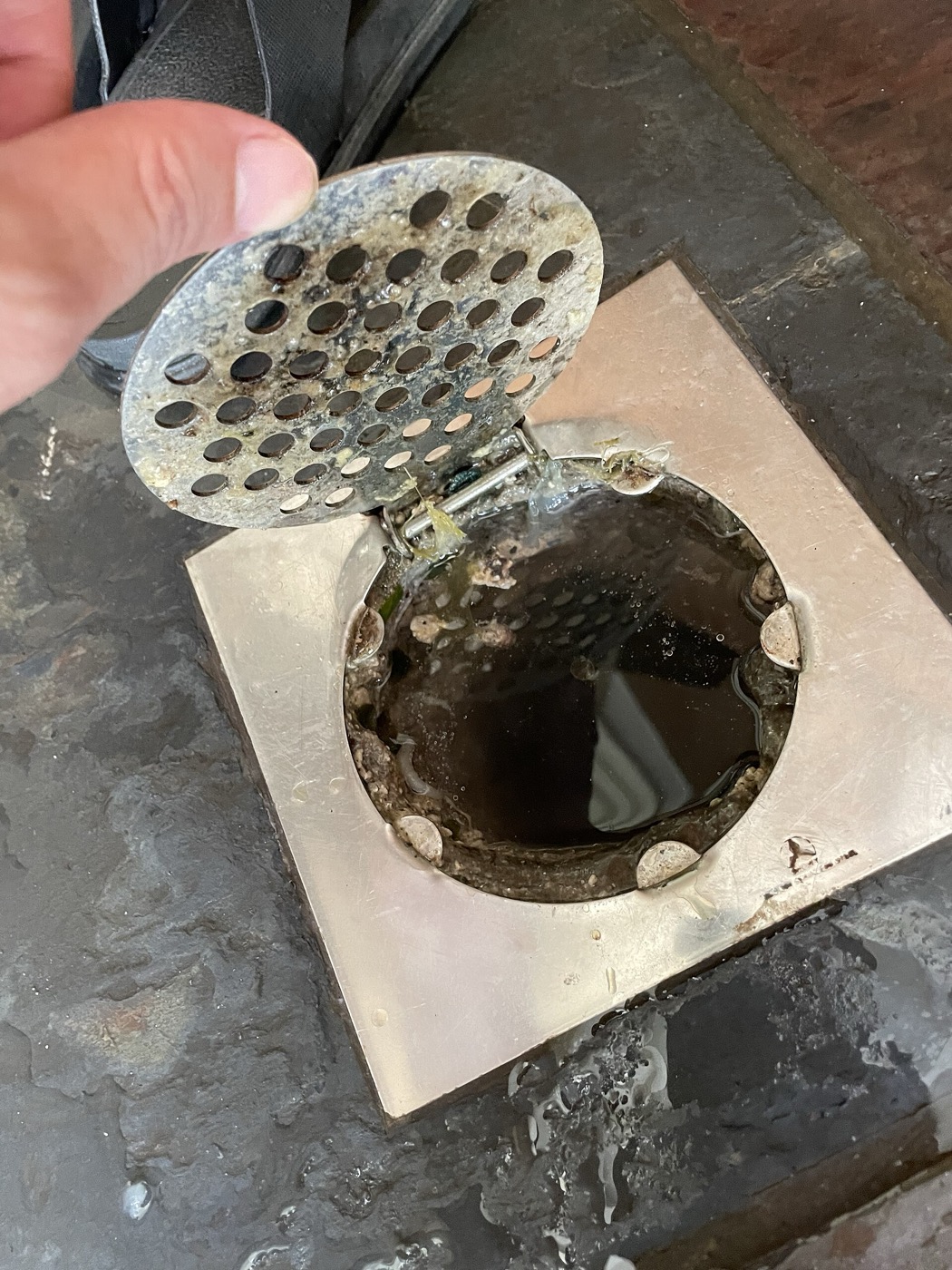
Photo: Sgconlaw, CC BY-SA 4.0, via Wikimedia Commons.
The kitchen floor trap in a 4-room HDB flat starts holding water after the evening wash-up, and by the weekend the toilet bowl is draining slowly too. Before you pay anyone, it helps to know whether the choke is inside your own fixture or further down the shared pipe.
Most toilet bowl choke and floor trap choke problems in Singapore flats sit close to the surface: wet wipes or sanitary items in the bowl, and grease, food scraps or hair in the floor trap. A plunger, hot tap water and a good clean of the trap clear many of them. If water rises in your floor trap when the flats above use theirs, or several fixtures back up at once, the blockage may be in the main sanitary pipe, which is your Town Council's responsibility.
What usually causes the choke
HDB's home care guide puts it simply. Floor trap chokes come from solid matter and grease blocking the flow of water (HDB, floor traps), and toilet chokes come from solid items such as sanitary pads or diapers being flushed (HDB, toilets).
In Singapore flats the usual culprits are:
- wet wipes, including the ones labelled "flushable", which do not break up like toilet paper;
- sanitary pads, diapers, cotton buds and kitchen towel in the toilet bowl;
- cooking oil and curry gravy poured into the kitchen sink or floor trap, which cools and coats the pipe;
- rice, vegetable bits and coffee grounds washed off plates into the floor trap;
- hair and soap scum in the bathroom floor trap, especially near the shower;
- a child's toy or a bottle cap dropped into the bowl.
Kitchen floor trap chokes in HDB flats are common because many households rinse the kitchen floor and sweep the water, and whatever is on the floor, into the trap.
Safe first steps before calling anyone
For a toilet bowl choke
- Stop flushing. Every flush adds water to a bowl that cannot empty.
- Wear rubber gloves and put old towels around the base.
- Use a flange plunger (the type with a rubber sleeve at the bottom). HDB's guide says to place the plunger over the waste hole and pump vigorously, and that the blockage usually clears after a few pumps.
- Keep enough water in the bowl to cover the plunger cup, so you are pushing water rather than air.
- If the water level drops, flush once to test.
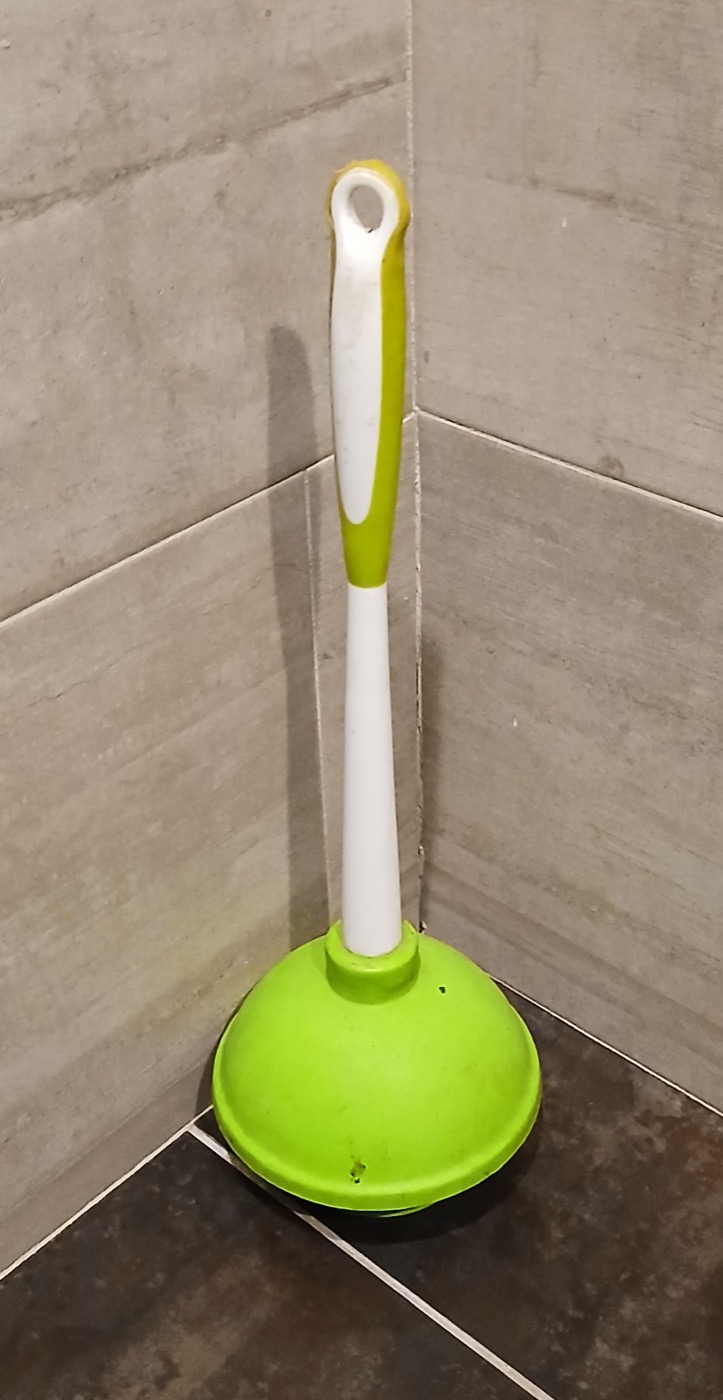
Photo: Ser Amantio di Nicolao, CC BY-SA 4.0, via Wikimedia Commons.
If a few rounds of plunging do nothing, or you know a solid object went in, stop. Forcing a toy or a phone further into the bend makes it harder to remove.
For a kitchen or bathroom floor trap choke
- Lift the grating. Most HDB floor traps have a removable cover and, below it, a removable inner cup or trap insert.
- Scoop out hair, food and sludge by hand with gloves, or with an old spoon.
- Pull out the inner cup if it lifts, and scrub it.
- Pour hot tap water (not boiling) down slowly to soften grease. Boiling water from a kettle can damage older PVC joints.
- For a slow kitchen drain, an enzyme drain cleaner left overnight will break down light grease.
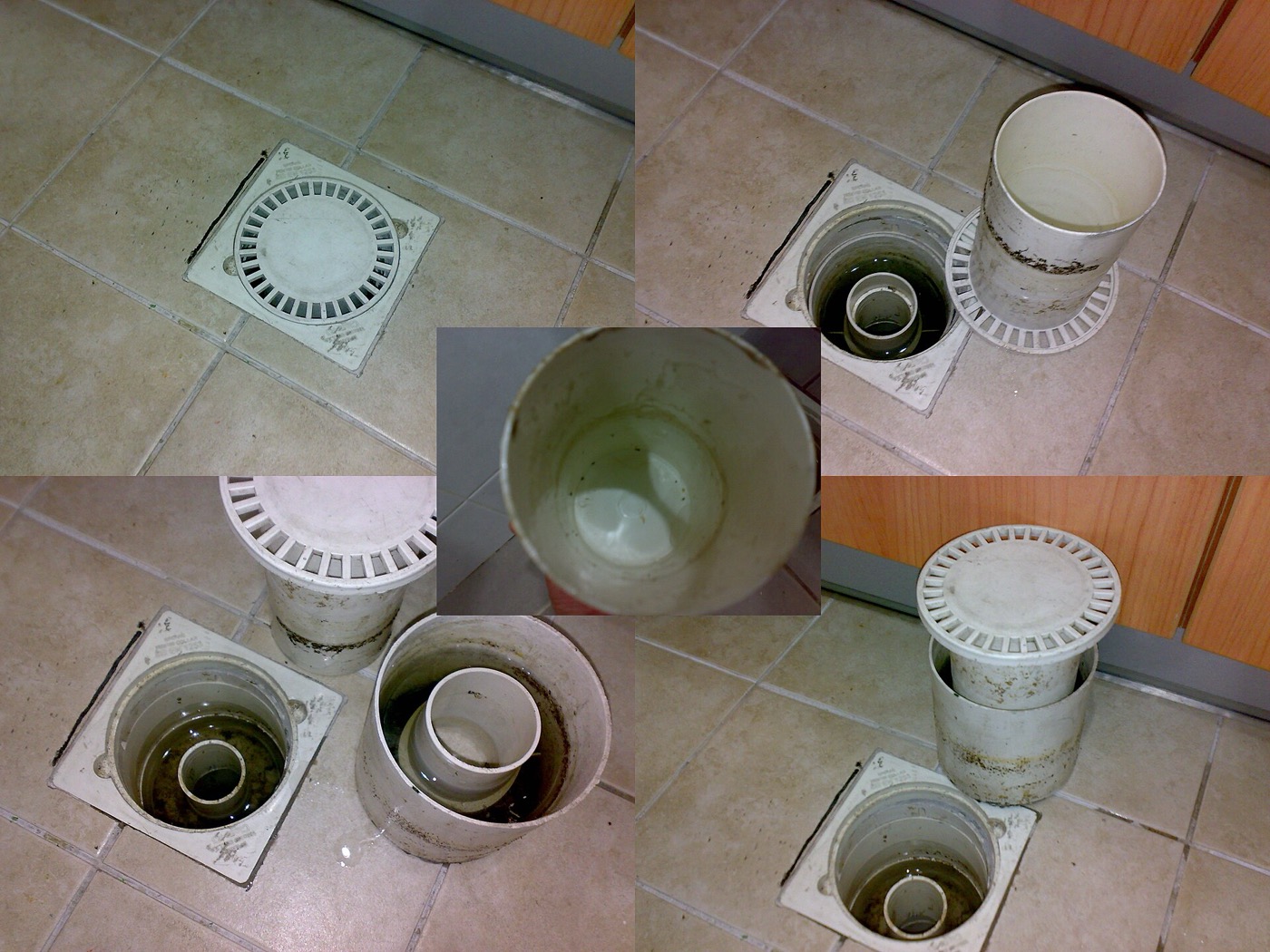
Photo: KLLvr283, CC BY-SA 3.0, via Wikimedia Commons.
HDB's guide also suggests using a degreaser on kitchen sink discharge pipes regularly, and keeping the grating closed to stop hair and solids from getting in.
What not to do
Do not mix drain chemicals. Pouring a caustic drain opener on top of a bleach-based or acidic toilet cleaner can release toxic gas or make the water boil up out of the trap. The US EPA warns against mixing bleach with ammonia-based cleaners for the same reason (US EPA). HDB's ceiling leak guide also asks owners to use non-corrosive detergents (HDB, ceiling leaks). If you have already poured in a chemical and it did not work, tell whoever comes to clear it, because they will be putting their hands and tools in that water.
Skip the wire coat hanger in the toilet bowl as well. It scratches the glaze and rarely reaches the blockage.
Is it your pipe or the common stack?
This is the question that decides who pays. HDB says flat owners must maintain the sanitary branch pipes in their flats, while the Town Council is responsible for maintaining the main sanitary pipes (HDB, pipes).
Signs the blockage is likely in your own fixture or branch pipe:
- only one fixture is affected (just the toilet, or just the kitchen trap);
- the problem started after something went down that should not have;
- plunging or cleaning the trap improves it, even briefly.
Signs it may be in the main sanitary pipe:
- dirty water comes up through your floor trap when you are not using any water;
- the toilet bowl water level rises or gurgles when neighbours above flush;
- the kitchen trap and bathroom trap back up at the same time;
- neighbours on the same stack report the same problem.
If you see the second set of signs, call your Town Council first. Clearing your own trap will not fix a blocked main pipe, and the overflow can keep coming back up.
When to call someone
Call a handyman when the plunger and trap clean have not worked, when an object is stuck in the bowl, or when the floor trap keeps choking every few weeks. A general handyman can clear a routine choke in the toilet bowl, floor trap or sink using a plunger, drain auger or trap cleaning.
HDB's guides say to engage a licensed plumber for serious floor trap chokes and for toilet blockages you cannot clear. Any work that involves cutting, replacing or reconnecting pipes, or anything on the water supply side, needs a PUB licensed plumber. A blockage in the main sanitary pipe goes to the Town Council.
Typical Singapore prices for clearing chokes
These are typical Singapore market ranges, not fixed quotes. The price moves with how deep the blockage is, whether an object has to be retrieved, and access.
| Job | Typical Singapore price | Notes |
|---|---|---|
| Toilet bowl choke clearing | S$80 to S$200 | Plunger or auger; retrieving an object can cost more |
| Kitchen or bathroom floor trap choke | S$70 to S$160 | Clean trap and clear the branch pipe |
| Kitchen sink or basin choke | S$70 to S$160 | Clear the trap and waste pipe |
| Main sanitary pipe (common stack) blockage | Town Council | Report it; do not pay a private contractor to clear a common pipe |
Ranges from Homejourney (choked sink or floor trap S$70 to S$160), Helpling (choke clearing S$130), SingSaver and Yahoo's plumber list (S$60 to S$300 across providers).
Quote traps:
- a low call-out price that becomes S$300 once "high-pressure jetting" is added without explaining why;
- a quote to replace a floor trap or pipe before anyone has tried to clear it;
- charging you to clear what turns out to be a common stack blockage.
Ask what method they will use and what happens if it does not clear.
How to stop it happening again
- Bin wet wipes, sanitary items and cotton buds. Keep a lidded bin next to the toilet.
- Wipe oily woks and plates with kitchen paper before washing, and pour used cooking oil into a container for the rubbish chute.
- Keep the floor trap grating closed and use a sink strainer.
- Clear hair from the bathroom trap once a week.
- Pour hot tap water down the kitchen trap after cooking-heavy days.
- Before a long holiday, cover the floor trap. HDB notes that an unused trap can lose its water seal and let smells through, and suggests sealing the cover temporarily.
What to send for a quote
Take a photo of the choked bowl, floor trap or sink, and a short video of the water level when you flush or run the tap. Tell us which fixtures are affected, whether you have used any chemicals, and whether neighbours have the same problem. Send it through the quote form on our handyman services page and we will tell you whether it looks like a job for us or for your Town Council.
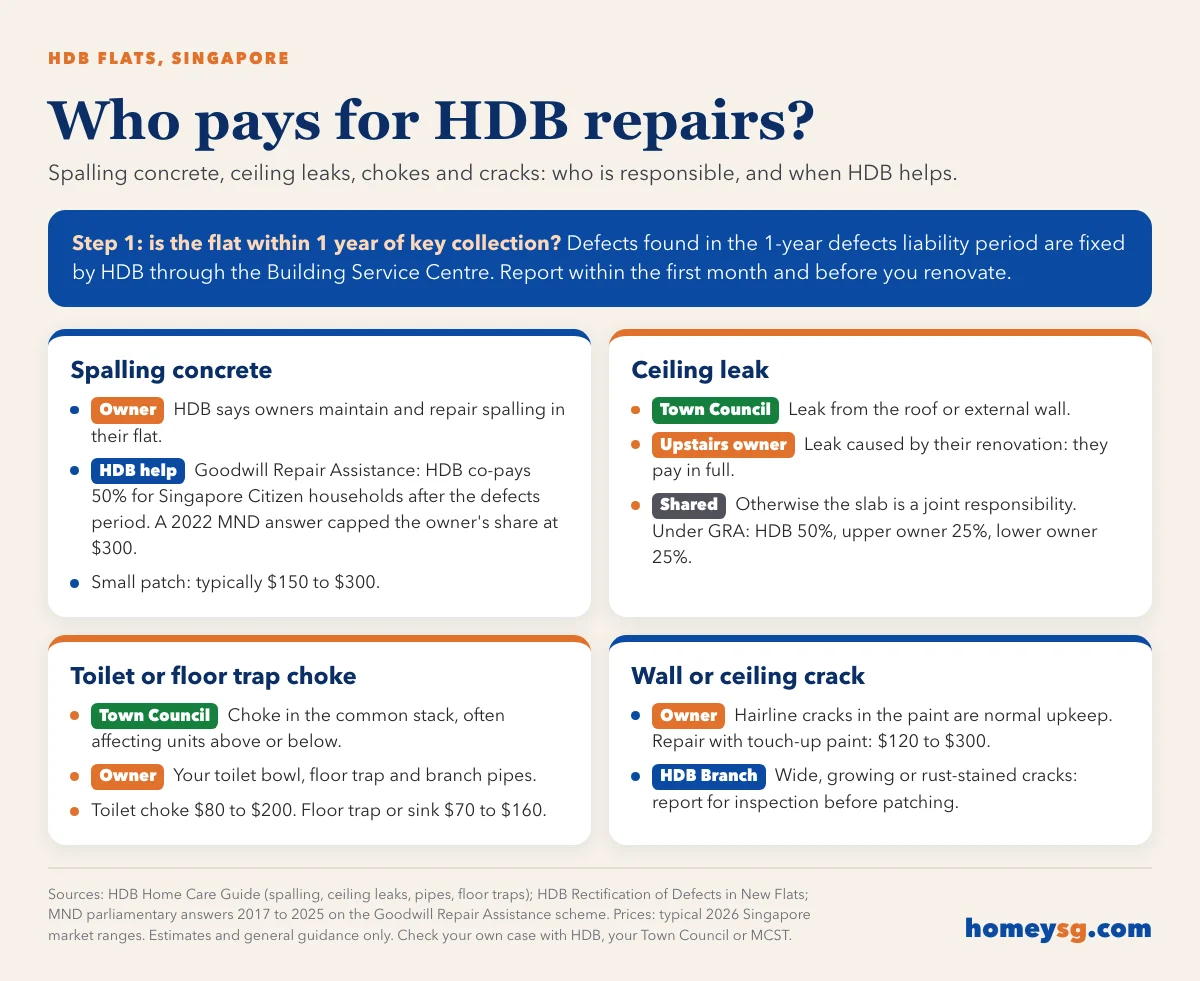
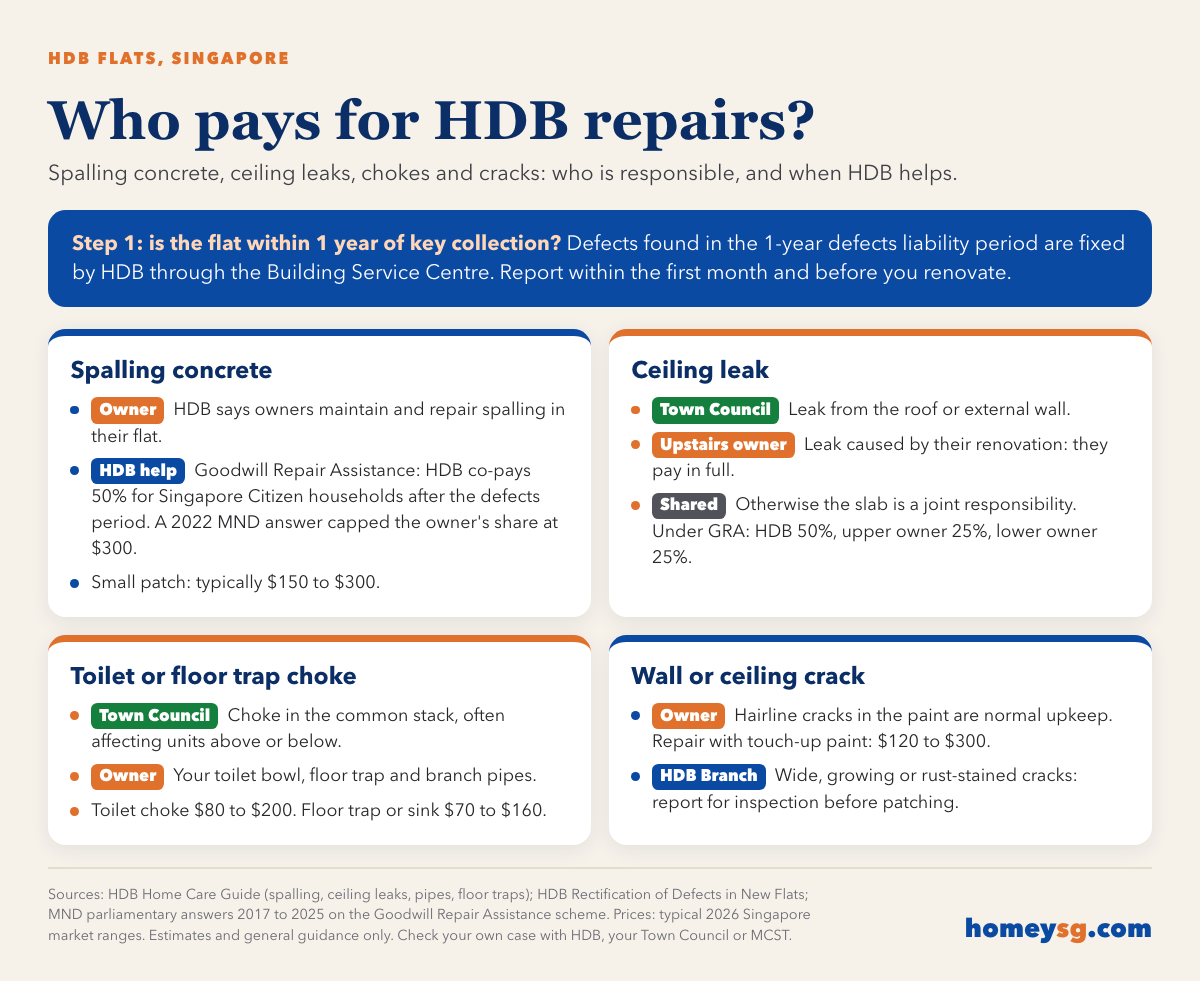
Embed this infographic on your site
Copy this code. Please keep the credit link.
FAQ
How do I clear a toilet bowl choke myself? Stop flushing, then use a flange plunger over the waste hole and pump firmly with enough water in the bowl to cover the cup. HDB says this usually clears the blockage after a few pumps; if it does not, call for help rather than forcing it.
Why does my HDB kitchen floor trap choke so often? Grease, food scraps and solids washed off the kitchen floor build up in the trap and branch pipe. Keep the grating closed, scrape plates before washing, and never pour cooking oil into the sink or trap.
Who is responsible if the common stack is choked? HDB says the Town Council maintains the main sanitary pipes, while owners maintain the branch pipes inside their flats. If water backs up when neighbours use theirs, report it to your Town Council.
How much does floor trap choke clearing cost in Singapore? Clearing a choked floor trap or sink typically costs S$70 to S$160, and a toilet bowl choke typically costs S$80 to S$200. These are typical market ranges and depend on how deep the blockage is.
Can I use drain cleaner and bleach together? No. Mixing drain chemicals, bleach or acidic toilet cleaners can release toxic fumes. Use one product at a time, rinse well, and tell the person clearing the choke what you have already used.
Do I need a licensed plumber for a choke? A routine choke in the bowl, floor trap or sink can be cleared by a general handyman. HDB advises a licensed plumber for serious chokes you cannot clear, and any pipe replacement or water supply work needs a PUB licensed plumber.