

Home guide
How to Remove Mould from a Wall in a Singapore Flat
Clean small mould patches safely, find out why they keep coming back, and know when a leak or spalling has to be fixed before any repaint.
- For a small patch on a dry wall, ventilate, wear gloves and a mask, then scrub with mould remover or diluted bleach.
- Let the wall dry fully, then repaint with anti-fungal paint; never paint over mould.
- If the wall is damp, bubbling or under a stained ceiling, fix the water source first.
- Never mix bleach with vinegar, ammonia or other cleaners.
 Homey Furnishing 9 min read
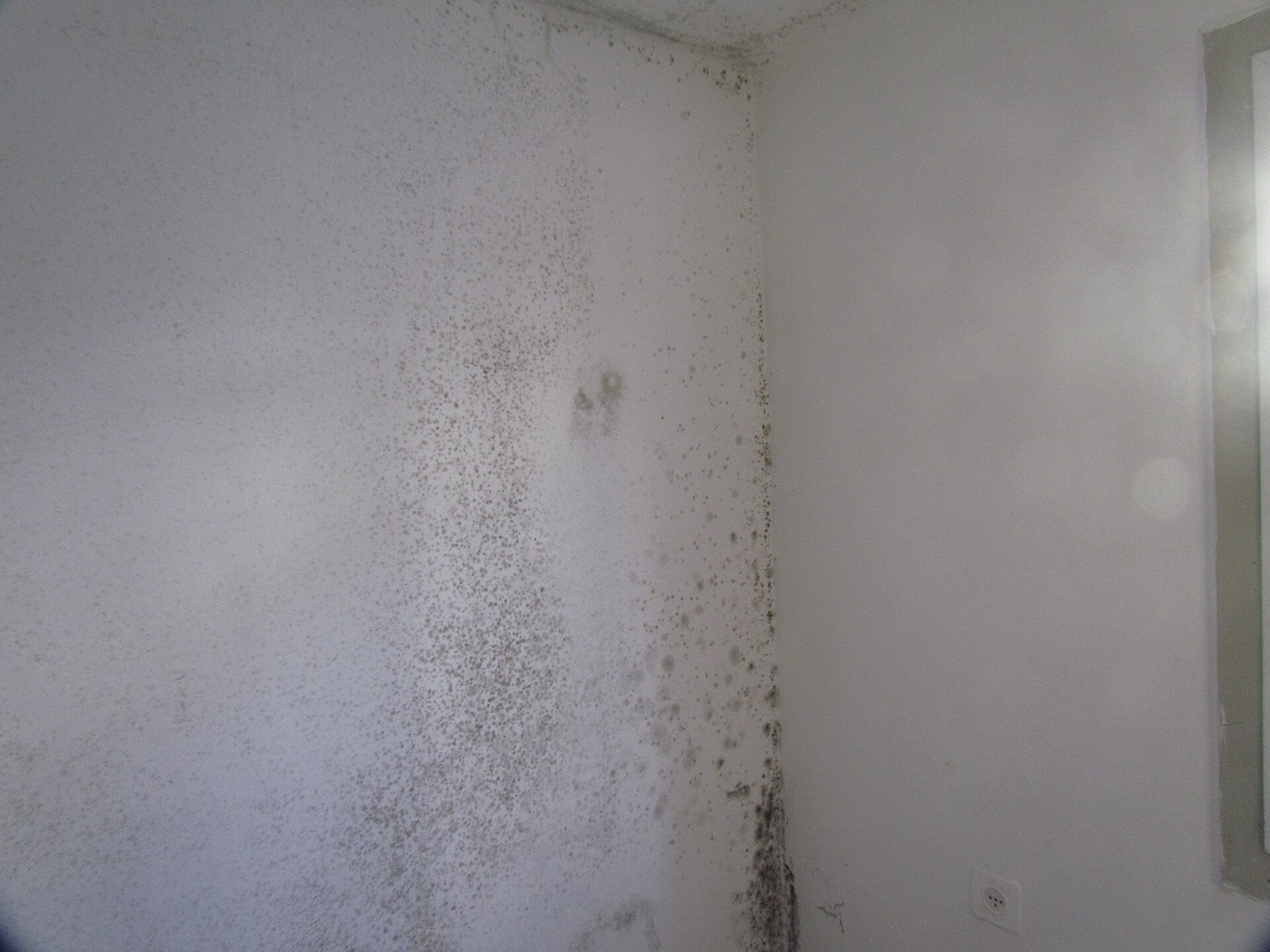
Photo: שי אבידן, CC BY-SA 4.0, via Wikimedia Commons.
You move the wardrobe in the second bedroom of a 4-room resale flat and the wall behind it is speckled black from skirting to shoulder height. The question is whether a spray and a cloth will do, or whether something behind the paint is feeding it.
Here is how to remove mould from a wall in a Singapore flat. For a small patch on a dry wall, ventilate the room, wear gloves and a mask, scrub with a mould remover or diluted bleach, let the wall dry fully, then repaint with anti-fungal paint. If the wall is damp to the touch, the paint is bubbling, or the ceiling above is stained, find and fix the water source first, because mould painted over a wet wall comes back within weeks.
Why mould grows on walls in Singapore flats
Mould needs moisture and still air. Singapore supplies the moisture all year, and a typical flat supplies the still air in a few predictable places:
- behind wardrobes and bed headboards pushed tight against an external wall;
- inside the bathroom, where the exhaust fan is off or the window stays shut after showers;
- around the bedroom aircon, where cold air meets warm humid air and condensation forms on the wall or window recess;
- under a ceiling where the flat above has a leaking bathroom floor;
- on walls that share a pipe run or a planter box.
HDB's own home care guide lists cross-ventilation and repainting walls regularly as the preventive steps for wall problems (HDB, walls). NEA's ventilation guidance says residents can improve home ventilation by opening doors and windows and using fans (NEA ventilation guidance).
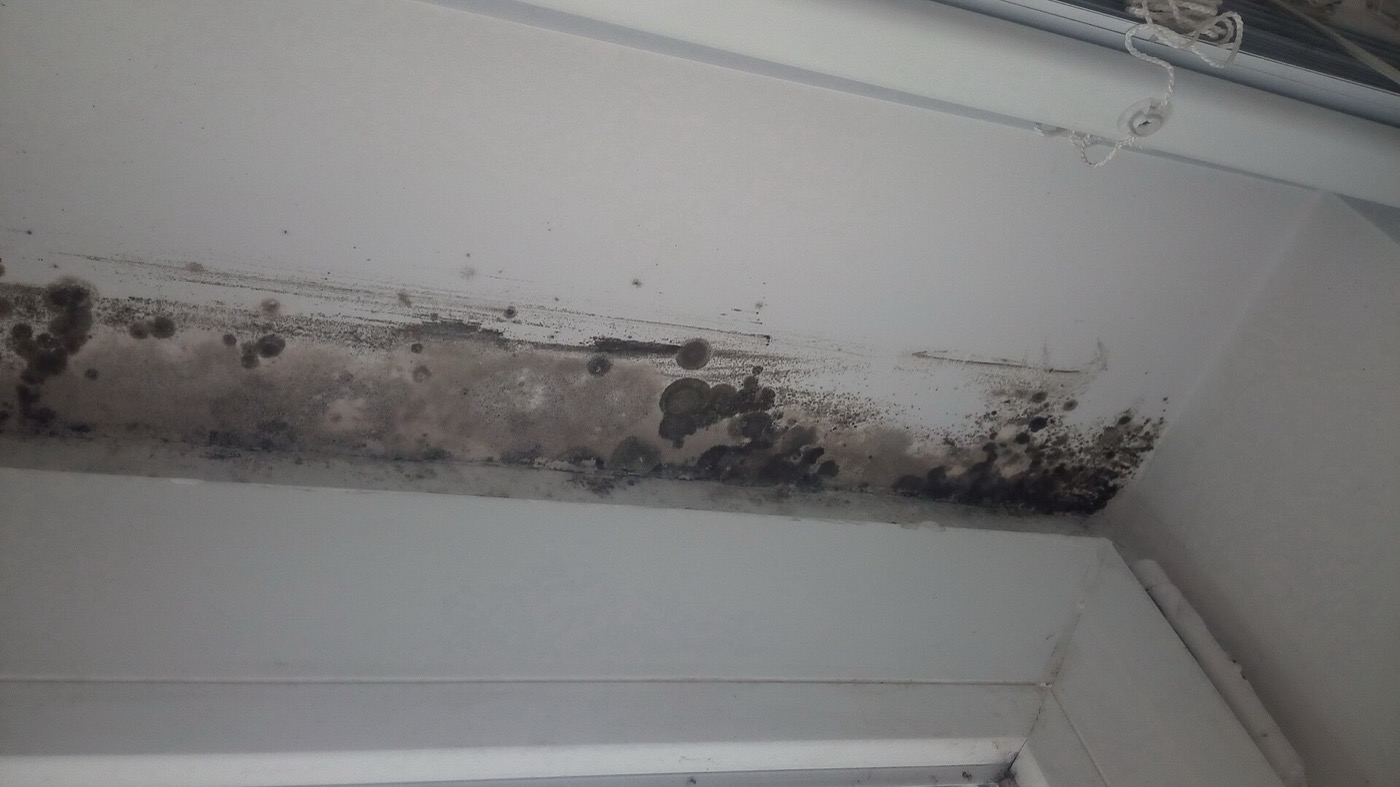
Photo: Alexander Davronov, CC BY-SA 4.0, via Wikimedia Commons.
A bedroom kept at 22 degrees overnight gets condensation on its coldest surface, often the window recess, and the mould grows in a neat line there.
Surface mould or water coming through?
Work out which of these you have before buying anything.
| What you see | Likely cause | What to do first |
|---|---|---|
| Grey or black speckles, wall dry to the touch, behind furniture or near the aircon | Condensation and poor airflow | Clean, dry, improve airflow, repaint with anti-fungal paint |
| Mould in a band near the floor, paint flaking, wall feels cool and damp | Moisture rising from a wet area next door (bathroom, kitchen, planter) | Check the adjoining wet area and its waterproofing before repainting |
| Brown ring stain on the ceiling, mould around it, drips after the upstairs shower | Ceiling leak from the flat above | Speak to the upstairs owner; this is a waterproofing job, not a paint job |
| Bulging or cracked concrete, rust stains, bits falling off the ceiling | Spalling concrete (corroded steel bars) | Spalling repair first, then paint |
HDB explains that ceiling leaks usually come from wear and tear of the waterproof membrane and screed in the floor slab of the flat above, that untreated leaks can cause mould growth, and that you and your neighbour may need to engage a contractor together. For leaks from common property, HDB says to contact your Town Council (HDB, ceiling leaks).
A quick test I use: tape a 30 cm square of cling film tight to the wall overnight with the aircon off. If droplets form on the room side, the moisture is condensation in the room. If the wall side of the film is wet, the water is coming through the wall.
How to clean a small mould patch yourself
The US Environmental Protection Agency's home guide says a patch smaller than about 10 square feet (roughly 1 square metre) is usually a job you can handle yourself (US EPA). Anything larger, or anything that keeps coming back, needs the cause found first.
- Open the windows, switch on a fan pointing outwards, and keep children, elderly family and anyone with asthma out of the room.
- Wear rubber gloves, goggles and an N95 mask. The EPA lists all three for mould clean-up.
- Spray a mould remover from a hardware shop, or wipe with diluted household bleach, onto a cloth or sponge. Do not soak the wall. Painted plaster takes up water and you will be waiting days for it to dry.
- Wipe in one direction and fold the cloth often, so you are lifting spores off instead of spreading them.
- Leave the area to dry completely. The EPA advises drying water-damaged areas within 24 to 48 hours to prevent mould growth.
- Bag the cloths and throw them out.
HDB's floor trap guide suggests diluted household bleach at 1 part bleach to 99 parts water for daily bathroom and kitchen cleaning (HDB, floor traps). Heavier stains may need a stronger product, so follow the label.
Never mix bleach with other cleaners. The EPA warns that bleach mixed with ammonia-based cleaners releases toxic fumes, and the same caution applies to vinegar and acidic toilet cleaners. Use one product, rinse, and let the room air out before trying another.
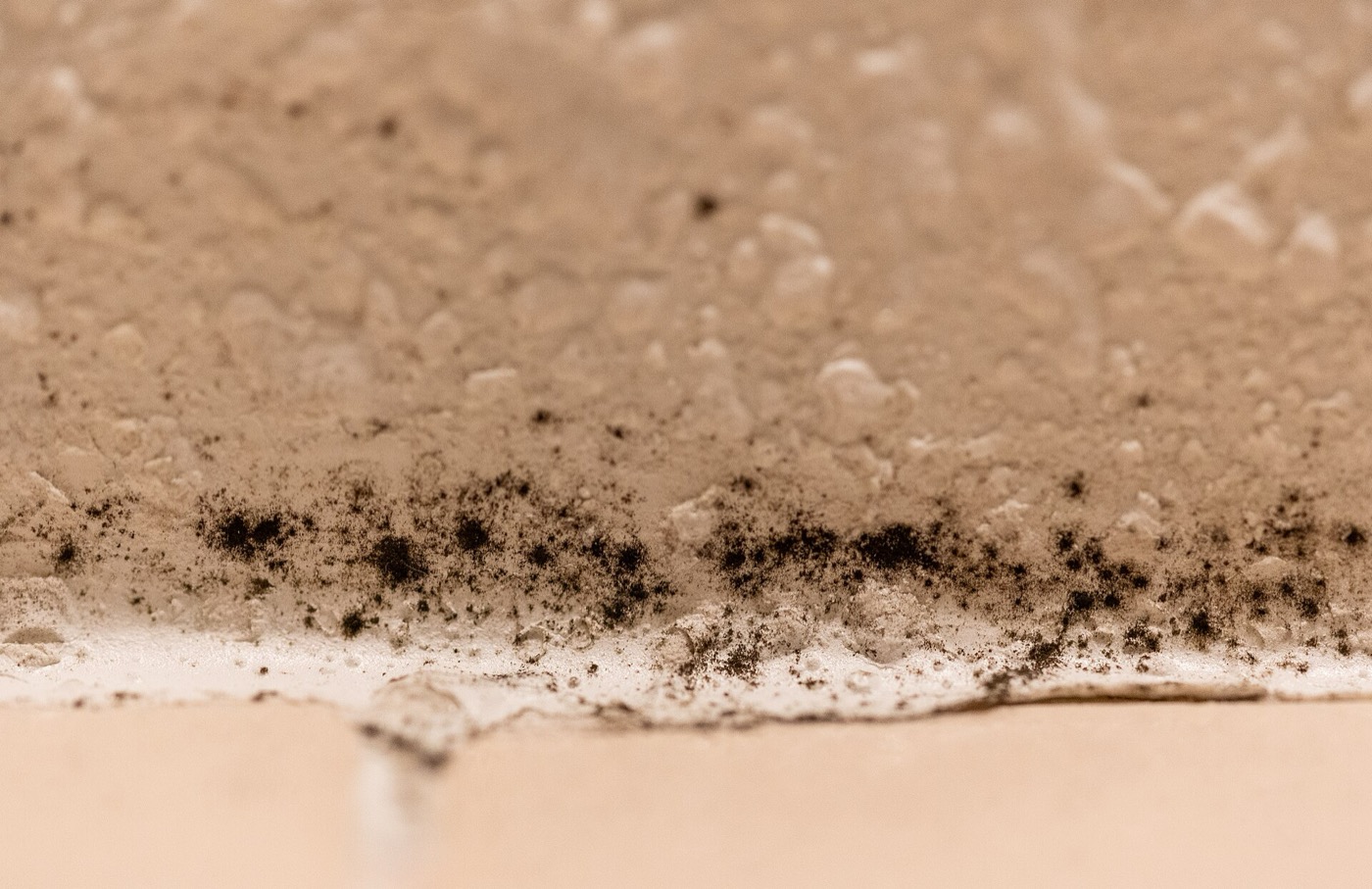
Photo: Tony Webster, CC BY-SA 2.0, via Wikimedia Commons.
Grout that stays black after a mould gel has mould inside it and needs raking out and regrouting.
When to repaint with anti-fungal paint
Repaint once the wall is clean and dry and you have dealt with the reason it got wet. The EPA says plainly not to paint or caulk over mouldy surfaces, because paint over mould tends to peel. In practice the black spots also bleed back through a fresh coat within a month or two.
A proper sequence on a mouldy bedroom wall looks like this:
- Scrape loose and flaking paint.
- Treat with a fungicidal wash and let it dry.
- Apply a sealer or primer where the stain was heavy.
- Finish with two coats of an anti-fungal or anti-mould emulsion.
If you also have hairline cracks, HDB's guidance for hairline cracks is to repaint with a flexible sealant or elastomeric paint (HDB, walls). Do the cracks at the same visit, otherwise you are paying for two sets of paint.
Skip the repaint for now if the wall still reads damp, if there is an active drip from above, or if concrete is bulging. Paint is the last step, not the fix.
When the cause needs fixing first
Some mould is a symptom. If any of these apply, sort out the source before cleaning or painting:
- A ceiling leak from the flat above. Agree the repair with your upstairs neighbour, following HDB's guidance on shared responsibility. Waterproofing a bathroom floor needs a waterproofing contractor, not a handyman with a roller.
- Spalling concrete. Cracked or bulging plaster with rust stains means the steel inside is corroding. The loose concrete has to be hacked off, the bars treated and the area patched before any paint goes on. A general handyman can patch small spalling spots; large or structural areas need a specialist.
- Leaking pipes inside the wall. Work on water supply pipes needs a PUB licensed plumber.
- Water from common property, such as a corridor, roof or external wall. Report it to your Town Council.
Once the source is fixed and the wall has dried, the clean-and-repaint sequence above should last. If you skip that step you will be cleaning the same corner again next year.
Typical Singapore prices for mould treatment and repainting
These are typical Singapore market ranges, not fixed quotes. Prices depend on the size of the area, the height of the wall or ceiling, how much furniture has to be moved, and how many coats are needed.
| Job | Typical Singapore price | Notes |
|---|---|---|
| Mould treatment + anti-fungal repaint, small area | S$120 to S$250 per wall area | Clean, treat, prime and repaint one patch or one section of wall |
| Full repaint of one wall | From S$120 per wall, often S$150 to S$250 | One colour, standard ceiling height; furniture moved by you |
| Small spalling concrete patch | S$150 to S$300 per patch | Hack, treat bars, patch and paint |
| Ceiling leak from the flat above | Quoted after the source is found | Waterproofing contractor; shared with the upstairs owner where HDB's guidance applies |
Sources for these ranges: SG QuickFix (patch and touch-up paint from S$120), Homejourney (patch and paint a small wall area S$100 to S$250), Carousell anti-mould treatment listings (about S$99 to S$180), The Money Bees (one feature wall S$150 to S$250) and High Tech Roofing for spalling.
Quote traps to watch for:
- a "mould removal" price that is really a single coat of paint over the stain;
- no mention of anti-fungal paint or primer, only "repaint";
- a ceiling patch quoted before anyone has checked whether the flat above is still leaking.
Ask the quote to state the area, the steps (scrape, fungicidal wash, primer, number of coats) and the paint product.
How Homey handles mouldy walls
Our handyman team cleans and treats mould, patches cracks and small spalling spots, and repaints with anti-fungal paint. We will not paint over an active leak. Ceiling leaks from the flat above and pipe work inside walls need a waterproofing contractor or licensed plumber, and we will tell you so instead of quoting a repaint that will fail.
If the mould left holes or flaking plaster after you removed shelves or fittings, see our hole repair service as well.
What to send for a quote
Take these photos in daylight:
- The whole wall or ceiling, from the doorway.
- A close-up of the worst patch with a coin or tape measure in the frame.
- The ceiling above and the skirting below the patch.
- The other side of the wall, if it is a bathroom, kitchen or planter.
Add the flat type, which room it is, and whether the wall feels damp. Send them through the quote form on our handyman services page and we will reply with a price range and whether the cause needs fixing first.
FAQ
Can I just paint over mould on my wall? No. The US EPA advises against painting over mouldy surfaces because the paint tends to peel and the mould grows back underneath. Clean, dry and treat the wall first, then use anti-fungal paint.
Is bleach or vinegar better for wall mould? Diluted bleach or a mould remover works on painted walls, and HDB suggests diluted household bleach (1 to 99) for routine bathroom cleaning. Use one product at a time and never mix bleach with vinegar, ammonia or other cleaners.
Why does mould keep coming back on the same wall? The wall is still getting wet, usually from condensation behind furniture, an aircon near a cold surface, or water coming through from a bathroom or the flat above. Fix airflow or the leak, then repaint.
Who pays for a ceiling leak that caused mould in my HDB flat? HDB says flat owners are responsible for the upkeep of their flats and that you and your upstairs neighbour may need to engage a contractor together for a ceiling leak. For leaks from common property, contact your Town Council.
How much does mould treatment and repainting cost in Singapore? A small area with mould treatment and anti-fungal repaint typically costs S$120 to S$250 per wall area, and a full one-wall repaint usually starts from about S$120. These are typical market ranges, and the final price depends on size, height and access.