

Home guide
How Much Do Curtains Cost in Singapore? (2026 Breakdown)
How much curtains cost in Singapore in 2026: real HDB and condo price ranges, what drives the quote, and where people quietly overspend.
- Whole-flat curtains in 2026 cost about $1,000 to $1,800 for a 3-room HDB and $1,500 to $2,800 for 4 to 5-room.
- Condos typically run $2,500 to $5,000+, and a simple pair for one window is $150 to $300.
- Fabric is the biggest price driver, and S-fold often uses 20 to 40% more fabric than pleated.
- Ask every vendor to itemise fabric, track and labour instead of one lump sum.
中文版:新加坡窗帘指南 · Bahasa Melayu: Harga langsir dan bidai
 Homey Furnishing 4 min read
 You will not get an exact curtains price in Singapore over text, because nobody has measured your windows yet. You can still walk in knowing the 2026 ranges, what drives the quote, and where people quietly overspend.
HDB curtain price and condo ranges for 2026
For a standard Singapore home in 2026, curtains for the whole flat (living room plus bedrooms, with day and night layers) typically land here (or see our fixed-price BTO move-in packages, which bundle curtains with the installs):
- 3-room / smaller HDB: about $1,000 to $1,800
- 4 to 5-room HDB: about $1,500 to $2,800
- Condo (larger windows, more of them): about $2,500 to $5,000+
Per window, a simple pair might be $150 to $300. A wider living-room set with premium fabric and S-fold can be $600 to $1,200 on its own.
These are ballparks. Use them to spot a quote that is wildly off.
What actually drives the price
Five things. When a quote feels high, one of these is the reason, and you are allowed to ask which.
1. Fabric. The single biggest lever. Sheer day fabric is cheap. Heavy blackout, textured linen, and designer fabrics cost more. Same window, different fabric, can double the price.
2. Fold style. Pleated is standard. S-fold (ripple fold) uses more fabric for that clean wave look, so it costs more. Often 20 to 40% more fabric for the same window.
3. Width and drop. You pay by fabric used. A wide living-room window or a floor-to-ceiling condo drop uses far more material than a standard HDB bedroom window. Fullness multiplies this.
4. Track vs rod, and motorisation. A basic track is cheap. A motorised track is a real jump, but it is the right call for wide, heavy, or daily-use curtains.
5. Labour and install. Measurement, sewing, and installation. This is usually the smallest line. It is the one that protects all the others from being wasted on a wrong size.
| Cost driver | Cheaper choice | Pricier choice |
|---|---|---|
| Fabric | Sheer / basic dim-out | Blackout, linen, designer |
| Fold | Pleated | S-fold / ripple |
| Size | Standard HDB window | Full-height condo drop |
| Control | Manual track | Motorised track |
| Layers | Single layer | Day plus night (two tracks) |
Ask any vendor to itemise fabric, track, and labour. If they can only give one blended lump sum, that is your signal something is padded.
Where people overspend
Leak 1: premium everything, everywhere. People pick S-fold blackout for the whole house when the corridor-facing service yard just needs cheap privacy. Spend where it matters (bedrooms). Go basic where it does not.
Leak 2: buying blackout fabric expecting total darkness. Then paying again to fix the light leak. Blackout is a system: fabric plus pelmet plus side channels. If darkness matters, plan it from the start.
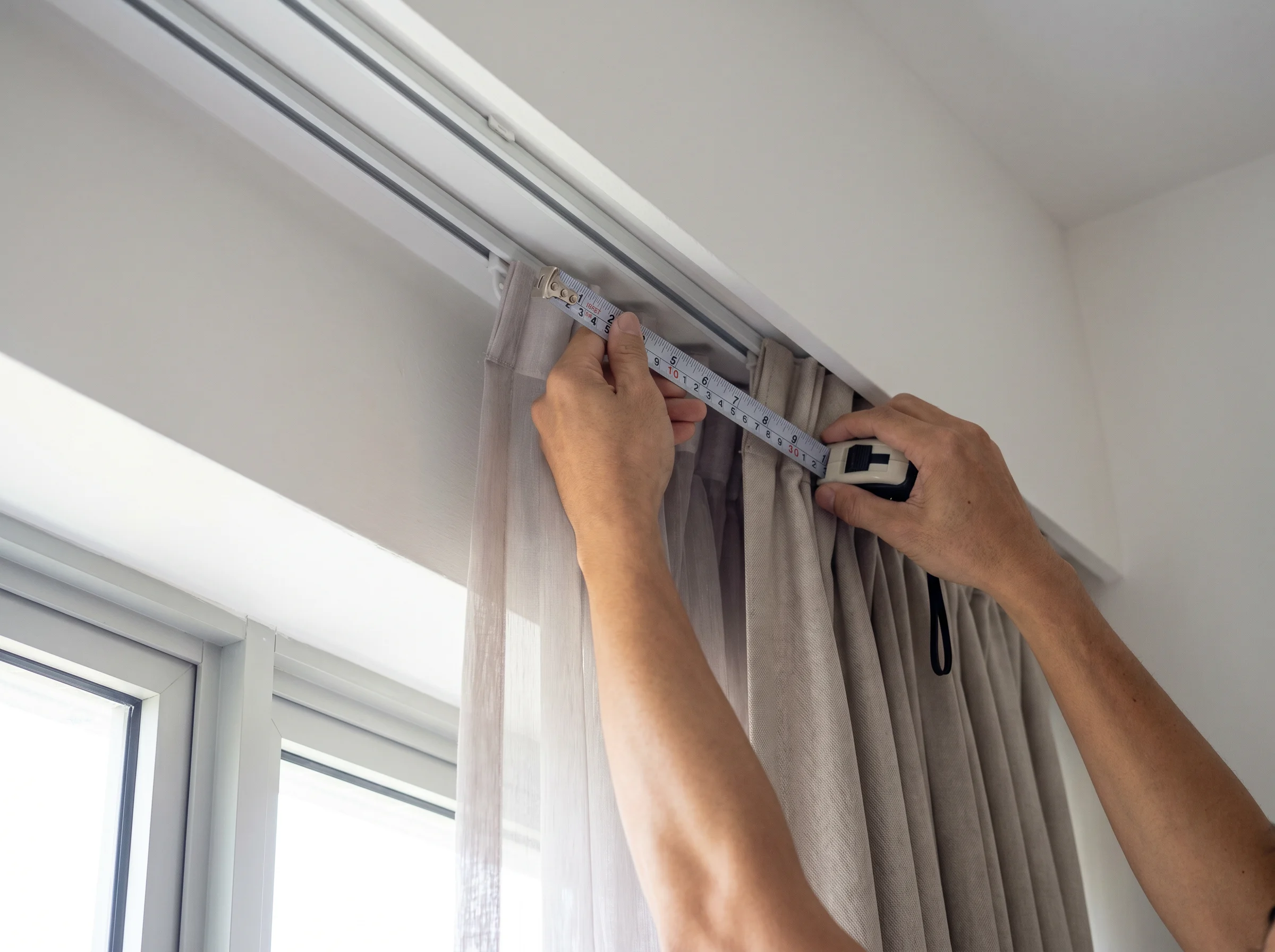
Leak 3: reorders from wrong measurements. A curtain that is too short or a track in the wrong spot gets remade, and you eat the cost. An on-site measure avoids this.
The cheapest route on paper, Taobao at about $200 vs a $2,000 Singapore quote, is not free. You take on measuring, track sourcing, self-install, and zero accountability if it is wrong.
The gap between DIY and a local quote is the measurement, the light-gap check, the track that suits your wall, and someone to call if a panel hangs wrong.
| Flat type | Typical 2026 whole-home range |
|---|---|
| 3-room / smaller HDB | $1,000 to $1,800 |
| 4 to 5-room HDB | $1,500 to $2,800 |
| Condo | $2,500 to $5,000+ |
| Simple pair, one window | $150 to $300 |
| Wide living-room S-fold | $600 to $1,200 |
If you want a number for your actual windows, start at curtains in Singapore.
FAQ
How much are curtains for a 4-room HDB? Typically about $1,500 to $2,800 for the whole flat with day and night layers, depending on fabric, fold style, and window count. A precise figure needs an on-site measurement.
Why are S-fold curtains more expensive? S-fold uses more fabric to create the continuous wave, so material cost rises. Often 20 to 40% more than pleated for the same window.
Is it cheaper to buy curtains from Taobao? On paper, much cheaper (about $200 vs $2,000+). You take on measuring, tracks, self-install, and no accountability. Factor in the risk of a costly reorder.