

The cap is per item. It is not a cleaning budget, and it is not wear.
Singapore residential tenancy forms, including the CEA, PropNex and ERA patterns, usually give the tenant a first 30 days to report faults and a per-item cap of S$150, S$200 or S$250 for minor repairs. Aged cisterns, spalling and rotten window rivets are wear. Uncleaned aircon coils, pet damage, drill holes and a chipped quartz edge are not. Split invoices stop the argument.




trusted by 500+
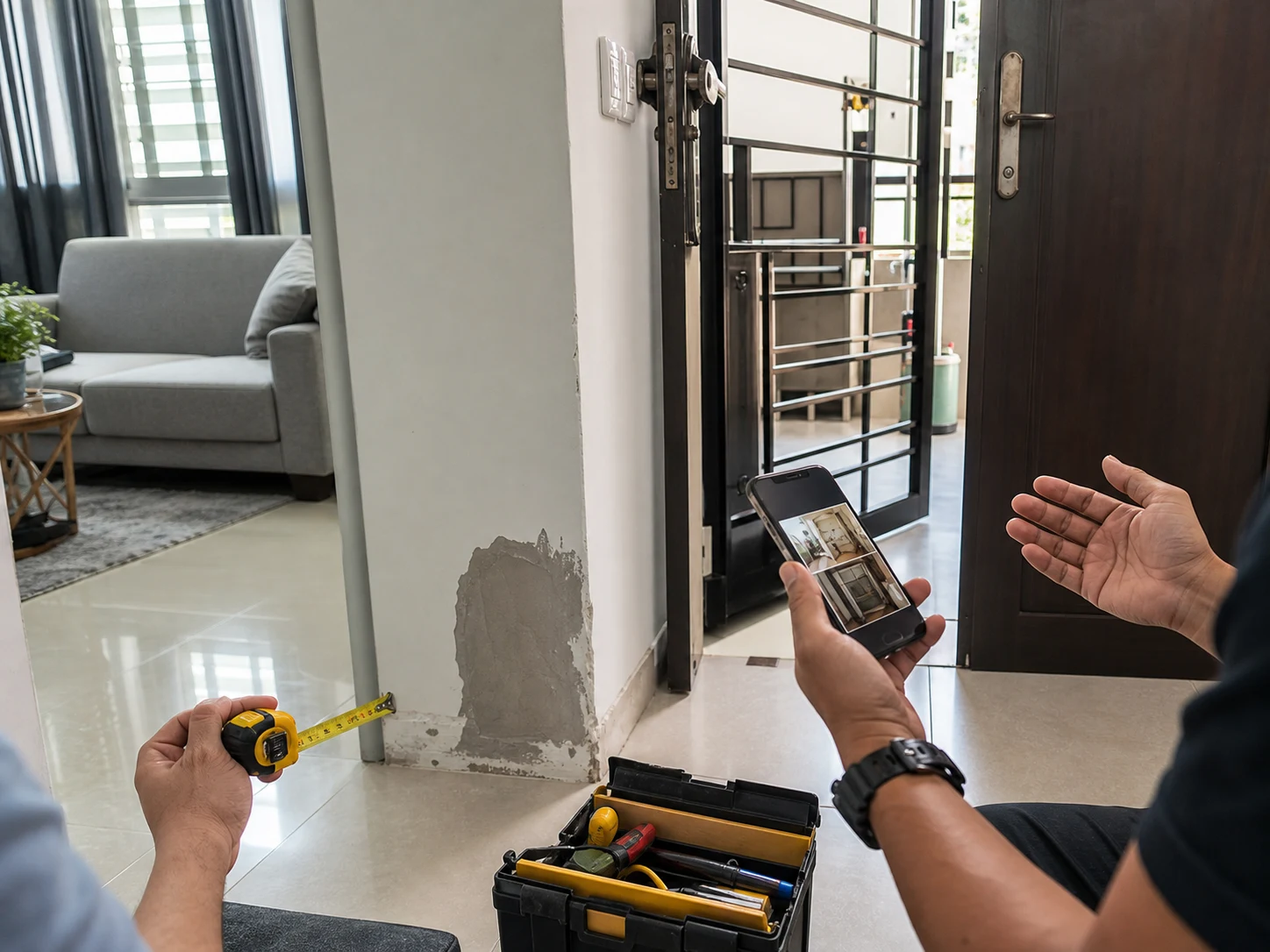



Executive summary and why it fails
Singapore residential tenancy forms, including the CEA, PropNex and ERA patterns, usually give the tenant a first 30 days to report faults and a per-item cap of S$150, S$200 or S$250 for minor repairs. Aged cisterns, spalling and rotten window rivets are wear. Uncleaned aircon coils, pet damage, drill holes and a chipped quartz edge are not. Split invoices stop the argument.
The first 30 days, sometimes called a problem-free or warranty period in the form, is the tenant’s window to say the aircon was already weak, the cistern already ran, the silicone was already black. After that, silence is read as acceptance. The minor-repair clause then says the tenant pays for small repairs up to a figure per item. S$150, S$200 and S$250 are the numbers we see. It is per item, not per year and not per room. Two hinges are two items if the form says so, or one visit if the form counts a trade call. Read the sentence. A landlord who waves “the cap” at a S$900 leak has not read it either. Above the cap, the form usually splits or assigns the excess. That is a clause, not a custom.
Fair wear is age. A concealed cistern valve that has hardened, concrete spalling on an old ledge, a storage heater that has reached the end of a tank, rotten window rivets on a 30-year sash: the tenant did not install that decay. Tenant responsibility is use. Aircon coils never washed, curtains and sofas scratched by a cat, TV holes, a quartz or basin chip from a dropped pan, artificial-turf glue left on a balcony. The cleaning guide lists the handover photos. This page lists who pays. A chipped sintered edge is a repair with a price. It is not wear, and it is not a reason to replace the whole top at the tenant’s cost if a resin fill will do. Match the remedy to the damage.
Split invoices are how the WhatsApp group stays civil. One bill from Homey Furnishing for the tenant’s holes and the chip, addressed as they ask. One bill for the landlord’s aged cistern or the rivets, and the rivets go to an RW01 contractor if that is what the window guide requires. A single invoice with mixed lines is how a deposit is held for a month. The diplomatic clause, if you are leaving early, does not delete this clause. Report in the first 30 days, keep the photos, and ask for two invoices when the items fall on different sides.
Homey Furnishing Pte. Ltd. (ACRA UEN 202018148K), 27 Mandai Estate, #06-10 Innovation Place, Singapore 729931, carries the permit-exempt portion of this work. V On Construction Pte. Ltd. (ACRA UEN 201611708H), listed on the HDB Directory of Renovation Contractors, carries any scope that needs an HDB renovation permit. Those two invoices are not interchangeable. The signed tenancy is the rule. CEA, PropNex and ERA forms are patterns, not a statute that overrides your pages. BCA window duties and SCDF fire doors still apply when the item is a stay or a rated leaf. This page is not legal advice.
Ten-minute diagnostic: safe check versus stop
Spend ten minutes with a torch, your phone camera, and a tape before you buy a product or book a hack. Write down what you see. The safe checks below do not ask you to open a live wire, cut a pressurised pipe, or lean out of a window. Find the cap figure and the 30-day sentence. List each defect as wear or use. Photograph both. Count items, because the cap is per item.
Stop at the red-flag column. Stop if you are about to drill a fire door or a window stay to stay under a S$150 cap. The reason DIY fails is almost never a lack of effort. It is that the tool or chemical makes the next professional repair harder, or it hides a leak, a live conductor, or a deposit line until the damage is larger than The cap is whatever the signed page says, commonly S$150 to S$250 per item. Works above the cap are the negotiation, not an automatic landlord bill..
| Symptom or measurement | Safe DIY check | Red flag: stop | Why DIY fails |
|---|---|---|---|
| Fault in week one | Photograph and email the landlord | You wait until month six | The 30-day period was the protection |
| Item is under the cap | The tenant line is real. Book the repair | You demand the landlord pay a S$80 trap | The clause is the deal you signed |
| Item is an aged cistern or rotten rivet | Landlord line. Rivets may be BCA | You pay to avoid the argument | Wear is not generosity. It is the category |
| Holes and a chipped top | Tenant line. Price the repair, not a new kitchen | You repaint and hope | The inventory photo is the chip |
Professional on-site sequence
This is the sequence a careful technician uses so you can tell a shortcut from a finished job. Tools stay in the van. Readings and photos go on the same worksheet as the price. Photos, the clause, and an invoice that can be split. The repair tools are the tools of that defect. Rivets are the window contractor’s tools.
- Step 1. Make the area safe and confirm the symptom still matches the photos. For The cap is per item. It is not a cleaning budget, and it is not wear., that means Stop if you are about to drill a fire door or a window stay to stay under a S$150 cap.
- Step 2. Measure before touching the finished surface. Find the cap figure and the 30-day sentence. List each defect as wear or use. Photograph both. Count items, because the cap is per item.
- Step 3. Set protection and lay out the tools that belong to this material. Photos, the clause, and an invoice that can be split. The repair tools are the tools of that defect. Rivets are the window contractor’s tools.
- Step 4. Carry out the repair in the order the material allows. a mixed invoice hides wear inside a tenant bill, or a tenant misses the 30-day report and inherits a pre-existing leak is the failure this order is written to avoid.
- Step 5. Test in place. Each item has an owner, a price and a photo. The tenant’s items are fixed or agreed as a deduction. The landlord’s items are not silently paid by the tenant. Deposits are then a short conversation.
- Step 6. Clean, label the photographs against the invoice lines, and leave the statutory openings, weep holes, access panels and labels visible.
The order matters because a mixed invoice hides wear inside a tenant bill, or a tenant misses the 30-day report and inherits a pre-existing leak is what happens when a step is rushed. Handover is a measurement, not a handshake. Each item has an owner, a price and a photo. The tenant’s items are fixed or agreed as a deduction. The landlord’s items are not silently paid by the tenant. Deposits are then a short conversation. If the reading or the water test fails, the visit is not closed and a second line is priced before anyone leaves. Permit work, if the diagnosis has moved into hacking, waterproofing, or a new layout, stops here and is repriced through V On Construction Pte. Ltd. UEN 201611708H.
2026 price, brand and lifespan
The cap is a contract number. The bands below are typical repairs so you can see which side of the cap they fall on. Prices below are 2026 Singapore bands for the described scope. They are not a coupon and they are not a guess after an unopened door. A second trade, such as a PUB licensed plumber or an EMA licensed electrician, is named when the law requires it rather than buried inside the labour line. Compare rows by what they include. The planning-life column belongs to that row only.
2026 SGD scope bands
| Scope | What you are paying for | 2026 SGD band | Planning life |
|---|---|---|---|
| Under a S$150 cap | Washer, stopper, small fill | S$40 to S$150 | Usually the tenant item |
| Around a S$250 cap | A hinge set, a small silicone run | S$150 to S$250 | Read whether the excess moves |
| Above the cap | Cistern, heater, several holes | S$250 to S$900 | The form decides the excess |
| Wear, landlord side | Aged valve, spall, rotten rivet | The real trade price | Not automatically the tenant’s |
Brand, material and lifespan
| Option | Where it is used in Singapore | Failure mode in humidity | Planning life |
|---|---|---|---|
| 30-day report | The tenant’s shield | Silence becomes acceptance | Write early |
| S$150 / S$200 / S$250 cap | Per item, as drafted | Not a cleaning wallet | Your page controls |
| Fair wear | Age and failure of old plant | Not pets, holes or chips | Do not swap the labels |
| Split invoice | The dispute tool | A mixed bill holds deposits | Ask for two |
Use the end-of-tenancy cleaning guide for the photos and the window guide if the item is a rivet.
Three Singapore property case studies
Three worked jobs show how the same symptom is priced differently in a new BTO, an older resale flat, and a private condo or landed house. The totals are the lines a household actually paid, not a national average. Permit-exempt invoices are issued by Homey Furnishing Pte. Ltd. UEN 202018148K.
Case 1: BTO rental in Sengkang
The tenant reported a running cistern on day 12. It was an aged valve, landlord’s side, S$220, above a S$150 cap and outside wear-as-tenant. A separate S$90 fill of their own hook holes stayed on the tenant invoice. The deposit was not used as a mixer.
Case 2: resale flat in Geylang
No report in the first month. A slow trap leak was discovered in month eight. The clause put the small repair on the tenant. S$160. The lesson was the email they did not send in week one, not the price of the washer.
Case 3: condo in Robertson Quay
A chipped quartz edge and cat-scratched sofa arms were tenant lines, resin fill S$260 and a leather clean S$240, on one tenant invoice. Rotten casement rivets were the landlord’s RW01 job and were not folded into the deposit. Two invoices, one handover.
The clause, the photo, and the two invoices
Shops and offices are a different paper
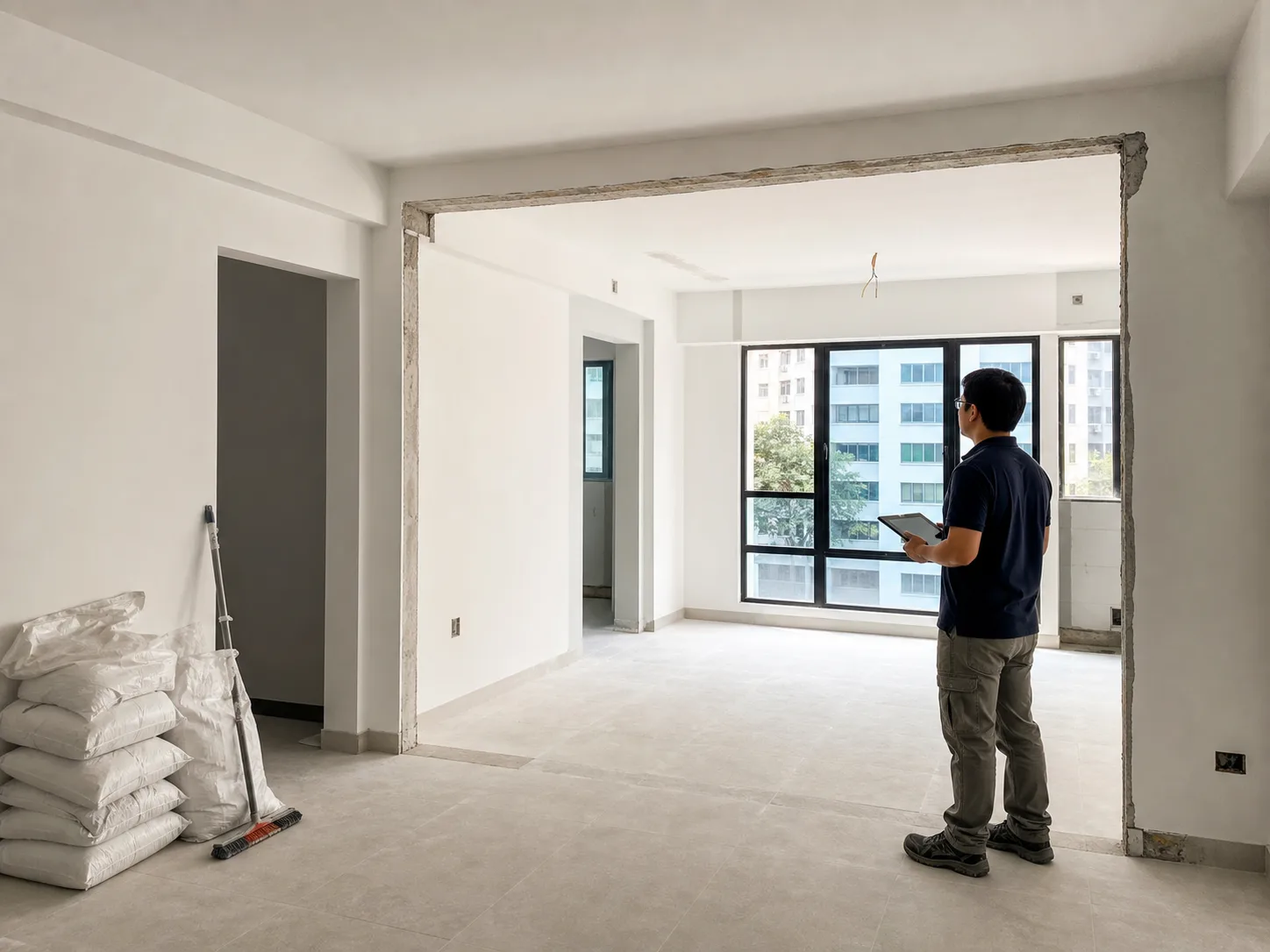
The clause on this page is a home tenancy. A shop lease, an MCST stair and a mall permit are separate.
Frequently Asked Questions
What is the first 30 days for?
To report faults that were already there: a weak aircon, a running cistern, black silicone. After a silent month, those items are easy to describe as the tenant’s. Email photos during the month. A WhatsApp that vanishes is a weak record.
Is the cap S$150, S$200 or S$250?
It is the figure in your signed form. Those three are common on CEA, PropNex and ERA patterns. It is usually per item. It is not a yearly wallet and it does not pay for a filthy oven. Read the excess sentence before you argue.
What counts as fair wear?
Age. Hardened cistern valves, spalling concrete, a storage tank at the end of its life, rotten window rivets. The tenant did not create those. The landlord, or the BCA contractor for rivets, owns the remedy.
What does the tenant pay for?
Use. Uncleaned aircon coils, pet scratches, drill holes, a chipped quartz or basin edge, turf glue on a balcony. Price the actual repair. A chip is not a new countertop if a resin fill will do, and it is not wear.
Why split invoices?
A mixed bill is how deposits get stuck. One invoice for the tenant’s items and one for the landlord’s items lets each person pay the clause they signed. Homey Furnishing Pte. Ltd. UEN 202018148K can write the lines that way. This is not a legal opinion.
Does an early exit delete the clause?
No. A diplomatic clause is about leaving early. The condition and minor-repair clauses still apply at handover. Clean, repair the use items, and return the wear items to the landlord with photos.