

Who approves a shop sign in Singapore
Outdoor shop signs are licensed by BCA, guided by URA, and often also constrained by HDB, a mall or an MCST. This guide uses those agencies’ own pages. It does not set HomeySG’s fee.


trusted by 500+
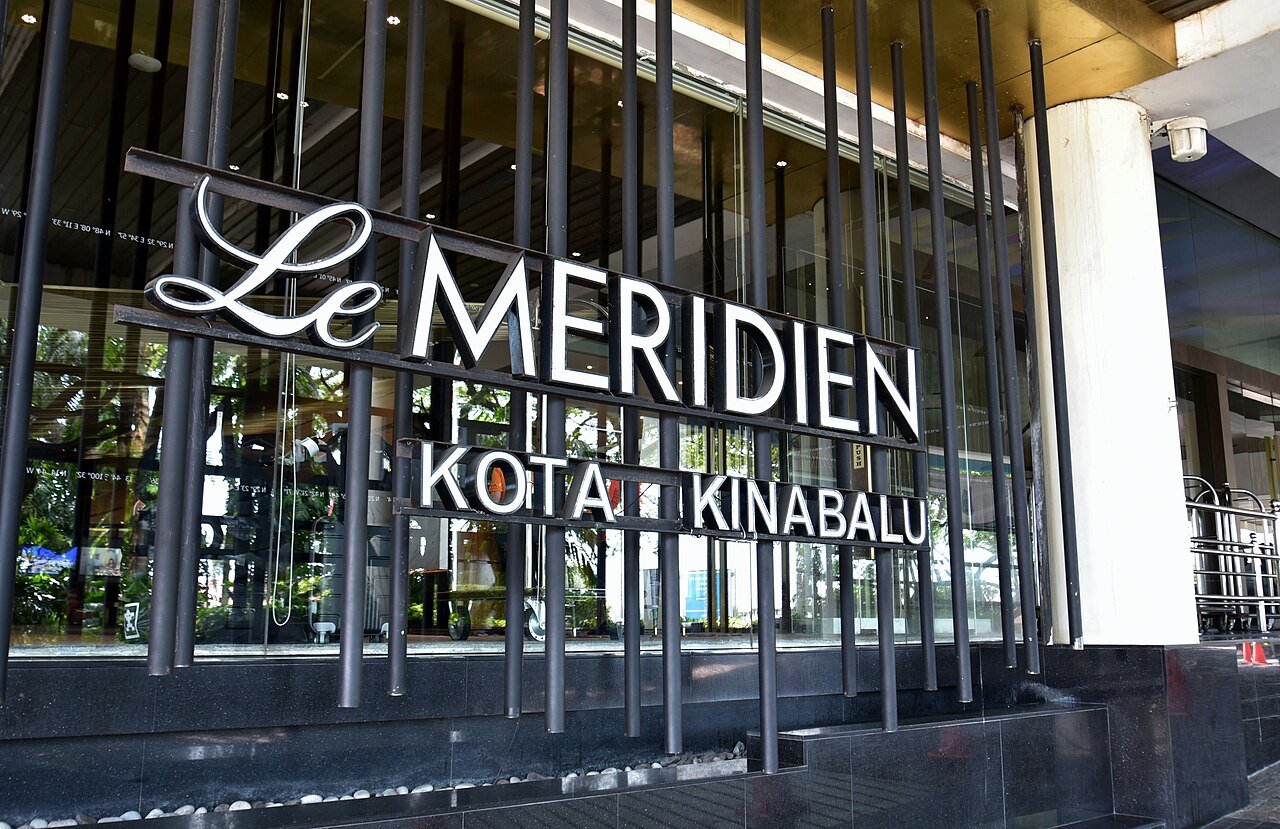
Photo: Bahnfrend, CC BY-SA 4.0, via Wikimedia Commons. A building-name sign in Kota Kinabalu. It is not a Singapore advertisement licence.


How it works
- 1
Decide whether the mark is a signboard about the premises or an advertisement for a brand.
- 2
Read BCA’s outdoor definition against the actual shopfront, not against a rule of thumb.
- 3
Collect the landlord, MCST or Town Council letter before you pay for fabrication.
- 4
Submit in the Advertisement Licensing System. Mounting stays quote on inspection and does not start without that status.
What this job is
Last updated 31 October 2026.
“Who approves a shop sign in Singapore?” does not have one rubber stamp. The search splits into a statute, a design guideline, a landlord and, for some buildings, HDB. People also ask how long it takes, what the licence fee is, and whether URA permission is still required. This page answers those from the pages the agencies publish. It was written on 31 October 2026. BCA has also issued a circular on the Building Control (Outdoor Advertising) (Amendment) Regulations 2026, to commence on 2 November 2026. Where today’s website and that circular could diverge after commencement, the circular is flagged rather than guessed.
Homey Furnishing mounts, removes and repairs signs. We do not grant licences, we do not fabricate panels, and we do not charge a sign price. Anything on this page that looks like a dollar is either a figure BCA publishes for its own fee, or a HomeySG band that already exists for a different job, such as a hole patch. Do not add them together and call the sum a sign.
The building-name letters in the photograph are not in Singapore and not an approval. They are a reminder that a name on a facade is still a sign, with a fixing and a category. Category comes first.
Curtains, blinds and roller shades are not part of this booking.
How the work is done
Start with BCA’s two definitions, because the fee and the exemption depend on them. An advertising sign is a logo, symbol, sign or other device that promotes goods, products, brands, services or events. A signboard relates to the place or premises it is fixed to, and BCA says it does not include a device that contains some other brand or trademark promoting goods or services. A cafe’s own name is the signboard conversation. A soft-drink logo across the same fascia is the advertisement conversation. If you are unsure, BCA tells you to submit in the Advertisement Licensing System rather than to pick the cheaper label.
Then test “outdoor”. BCA says you need a licence if you display an outdoor advertising sign or signboard. Outdoor includes any roofed space that is not fully enclosed on all sides and that facilitates pedestrian traffic or is accessible to the public. A five-foot way is the obvious case. A fully enclosed room is the obvious non-case. A covered mall link and an open shopfront are the cases to submit, not to decide in a group chat. Exemptions on the licence page include a single signboard, or a series of related signboards, with a total area of not more than 5 square metres. BCA’s FAQ is firmer: you cannot get more than 5 square metres of exemption, and the 5 square metres is strictly for signboards, not for other sign types. Religious bodies, government-aided schools, and charity-run hospitals, clinics, homes and hospices have signboard exemptions listed. Stalls in hawker centres, food centres and markets, and signs in underpasses, tunnels and MRT stations, are also listed. An election poster under the elections acts is on the FAQ list. None of these are a general permission for a shop advertisement.
The application path on the licence page is four moves. Log in to the Advertisement Licensing System with Singpass. Submit the proposal with the documents. Apply for a Permit To Use where it applies, through CORENET. Pay the licence fee. BCA says it typically takes 7 working days to assess an application if all required documents are provided, and an additional two weeks if URA evaluates the proposal. No changes are allowed during the formal application stage. The FAQ explains the earlier step in plainer language: consultation is where BCA advises whether the submission is in order and consults URA for you; you convert to a formal application after in-principle no objection. “Pending evaluation” means you wait. “Additional documents required” means you resubmit what they named. “Disallowed” means disapproved. “Licence not required” is a status the system can show. It is not a conclusion you announce yourself.
Documents BCA lists include visuals showing where the licence number will sit, an elevation with dimensions, a section of the fixing and the materials, a layout, a site plan, the 5 square metre declaration and photos of other signboards if you claim the exemption, a consent letter from the land or building owner, and clearances from agencies where they apply. LTA and SLA are the examples BCA gives for government land. For an MCST, a subsidiary proprietor needs the MCST’s consent and both endorse. A tenant needs the MCST, the lot owner and the landlord if different. For a Town Council commercial unit, the mirror list is Town Council plus owner, and for a tenant also the landlord. That stack is why a mall sign is slow even when the artwork is simple. The mall and condo page is the site visit. This page is the paper.
| What you should see at the end | What a sloppy visit leaves | Why it matters |
|---|---|---|
| The category matches the artwork | A brand called a signboard to chase the exemption | The application is the wrong type |
| Elevations show the licence-number position | A logo with no number location | BCA’s document list is unmet |
| Owner consent is signed before fabrication | The panel is built first | You own a sign you cannot hang |
| “Licence not required” is a system status | A chat conclusion | The sign goes up unlawful |
How to scope it
Write down the width and height in metres, the number of faces, and whether anything flashes. BCA’s fee table charges an additional fee for every face displayed, which is in the regulations as well as the website. A double-sided projecting sign is not one face. Measure letters mounted on a wall the way BCA’s fee-computation examples describe, rather than as a bounding box you invented. The examples on that PDF include banners and stickers, a lightbox, a sign with a frame, a sky sign, individual letters on a wall, an awning, a balloon and a free-standing sign. The calculator on ALS says the figure you get is not the final fee. Submit the consultation.
This guide does not prepare the drawings. A sectional fixing drawing is one of the documents. The fixings guide is what that section should be describing. If the structure exceeds the Permit To Use tests, a professional engineer applies through CORENET. We do not provide that stamp.
| What you see | What to photograph | Stop |
|---|---|---|
| Business name only, outdoor, under 5 square metres of signboard | Declaration form and photos of the other boards | Exemption is possible. It is not automatic |
| A product brand on the fascia | Advertisement, not the signboard exemption | Do not claim 5 square metres |
| Structure over 10 square metres, or 4 metres high | Permit To Use first | Engineer through CORENET. Fee BCA states is $200 a structure where floor area is not measurable |
| Conserved shophouse | URA conservation positions, submit to BCA | Do not use only the Central Area circular |
| HDB shop | HDB positions and sizes as well as BCA | A licence does not waive 600 mm |
Which job you actually have
Use the agency that actually wrote the rule you are worried about.
| Situation | Use this | Leave this alone |
|---|---|---|
| Outdoor name or ad | BCA licence page and ALS | A URA planning application for a sign DC21-04 says does not need one |
| Central Area, non-conserved | DC21-04, then BCA | The superseded 2009 central-area circular as if it were current |
| Outside the Central Area | The 14 September 2009 guidelines BCA still links | Inventing a newer circular we have not found |
| Conserved building | URA conservation sign page | A mall manual alone |
| HDB shop | HDB A&A page plus BCA | The flat renovation permit |
| Public street directional board | LTA’s February 2025 requirements | A shop vinyl visit |
| Exit sign | SCDF clause 8.1 and SS 563 | This licence |
Questions a business should ask
Questions a business should ask
Questions that come from BCA’s own FAQ and from the way jobs stall.
- Is this a signboard or an advertisement under BCA’s definitions?
- Is the location outdoor under the roofed-and-not-enclosed test?
- Are you claiming the 5 square metre signboard exemption, and do you already have other boards?
- Who must endorse: owner, landlord, MCST, Town Council, LTA, SLA?
- Does the structure need a Permit To Use?
- Will URA need to evaluate it, adding the two weeks BCA states?
- Who will be the licensee, knowing the licence cannot be transferred?
- Has anyone checked the 2 November 2026 amendment if the hang is after that date?
Which rule book, by building
The same fascia drawing meets a different stack of paper on each of these streets.
| Building | Design rules | Licence | Also |
|---|---|---|---|
| Non-conserved Central Area | URA DC21-04, effective 1 June 2021 | BCA before installation. URA planning permission not required for the signs that circular covers | Event signs read with the 2019 event circular DC21-04 points to |
| Outside the Central Area | URA’s 14 September 2009 guidelines. BCA’s supporting page still links them | BCA | Signboards allowed on buildings subject to size and height in that circular. Advertisements on commercial and industrial walls are limited there |
| Conservation area | URA positions: transom, door, column, five-foot way | Submit to BCA, or clear Category 3 with URA first | 2,500 mm headroom. Do not cover ornament or the date stone |
| HDB shop | Positions, 600 mm front height, 2.60 m, 25 percent ads, non-flicker | BCA for advertising, as HDB also says | Town Council if the sign is on common property |
| Mall or MCST | The manual, which can be stricter | BCA if outdoor, with the endorsements | Night permit to work |
| Public street | LTA temporary directional requirements if that is the sign | BCA still expects URA and BCA rules to be met | Not a shop fascia method |
Fees BCA publishes
These are BCA’s licence fees, copied from the supporting page last updated 26 August 2026. They are not HomeySG charges and they are not a fabrication price. The ALS calculator warns that an estimate is not the final fee. A signboard licence is $50 a year up to 15 square metres, and above that $20 a square metre or part thereof in excess of 5 square metres. An advertisement, directional sign or free-standing signboard is $20 up to 1 square metre, $90 above 1 and up to 5, $140 above 5 and up to 10, and $20 a square metre or part above 10, per sign. An animated billboard is $225 up to 10 square metres and $30 a square metre or part above that. A skysign or balloon is $40 a square metre or part. The minimum chargeable period is one month, subject to a minimum fee of $20. BCA’s example: 5 May to 4 June counts as one month, and 5 May to 5 June counts as two.
A Permit To Use, where floor area cannot be measured, is $200 a structure on that page. Where there is statistical gross floor area, it is $200 for every 100 square metres. The permit’s validity has to cover the whole display period or BCA says the licence application will reject it. GIRO is compulsory for annual auto-renewal. Without it, BCA says the licence lapses and you apply again. The FAQ says auto-renewal is for a licence of at least one year paid by GIRO, and that the expiry date of a one-year licence falls on the last day of the second-last month. Search and copy fees, if you need an old drawing, are also on the page: $20 to search, then $5 for a licence copy and $25 for a set of drawings, stated as inclusive of 9 percent GST. We do not collect any of these.
URA, in three geographies
DC21-04, effective 1 June 2021, superseded the 2009 central-area circular. It says the main tenant’s name or logo may now be at roof level on high-rise and mid-rise commercial developments across the Central Area, that buildings fronting Raffles Place Park have more flexibility for advertisements, and that the Serangoon Road signage route is extended to Rangoon Road. The maps are in its Annex A. Do not keep using the 2009 central-area route list as if DC21-04 had not been issued. Paragraph 7 of DC21-04 says applications are made to BCA’s Advertisement Licensing Department before installation, and that planning permission from URA is not required for putting up those signs. Paragraph 6 says BCA will use those guidelines plus the Building Control (Outdoor Advertising) Regulations when it evaluates outdoor advertisements and signboards on non-conserved buildings in the Central Area.
Outside the Central Area, the public page is the 14 September 2009 circular. Its URL sits under URA’s archived-circulars path. BCA’s supporting page, updated 26 August 2026, still points operators to “Outside the Central Area” as one of the three guideline sets. This guide does not treat the folder name as a repeal, because the page we read did not say superseded. What that circular does say, in summary: signboards for identification are allowed on buildings subject to size, height and form in the appendix; advertisement signs on commercial and industrial buildings are allowed within an aggregate of 100 square metres a frontage or 50 percent of the wall measured up to 30 metres, whichever is smaller, and the top edge stays within the commercial or industrial floors or 30 metres, whichever is lower; free-standing advertisement signs are not permitted except for stated temporary community-event cases. Read the appendix before you rely on a paraphrase.
Conservation is a third book. URA’s sign page, updated 11 June 2026, separates traditional signs, which you keep if they are significant plaster reliefs, from contemporary signs. Shopfront signs go in the transom. An original residential front takes a sign above the door no wider than the door. Five-foot-way hanging signs stay within the clear width between column and party wall, with at least 2,500 mm to the underside. Column signs, friezes, upper storeys and gable walls have their own figures on that page, including a 600 mm width for certain projecting signs. Submit to BCA’s advertising licensing section, or obtain URA Category 3 clearance first. The original building date on the facade is not removed.
HDB, malls, LTA and the exit sign
HDB’s shop A&A page is not a BCA exemption. It limits positions to above the front door, beside the front door, and above the rear door. Above the front door: 600 mm high and the width of the shop. Above the rear door: the existing door vent and not more than 1 square metre. Clearance at least 2.60 m. Only 25 percent of the board may be advertising for the approved trade. Lighting must not flicker. Town Council clearance is required for a signboard on common property, which the December 2025 shop renovation guide states. A franchise or related-company name has a further HDB approval on HDB’s scenarios page. The HDB shop page is the mounting version.
Malls and MCSTs add private rules and the endorsement list above. A verbal site walk with a facility officer is not the endorsement. Advertising on a residential facade is prohibited even when the shop below is commercial. Night work, if the mall demands it, is the overnight row of S$380 to S$650 only when the scope is permit-to-work admin and one hardware fix. A sign crew is usually quote on inspection.
LTA matters when the sign is on a public street or the agency is the land manager. BCA’s FAQ says directional road signs are for the land manager, names LTA and SLA, and says clearance is required where applicable. An in-principle no objection is not the licence. LTA’s February 2025 technical requirements for temporary directional signs ask for a location plan, a cross-section, and a dated photograph with the sign superimposed. They limit what may be printed, bar red, orange, yellow and amber backgrounds, keep signs off expressways, at least 30 metres from junctions and 0.6 metres from the kerb, and no more than 1.2 metres from the top of the sign to the ground. Aluminium signs may be approved for 1 to 12 months and wooden ones for 1 to 6. They must be removed within three days of expiry or LTA may treat them as illegal advertisements and recover removal costs. That is a street board. It is not the fascia over your shutter.
SCDF exit signs are not shop signs. Clause 8.1 requires an exit sign over the entrance to every exit on every floor, visible at all times, and forbids decorations or brightly illuminated non-exit signs in the line of sight. Electrically powered exit and directional signs comply with SS 563. Signs other than low-level ones may be mounted more than 2.5 metres and at most 3.5 metres above the finished floor if the conditions in that clause are met. We do not replace those signs with a lightbox face. If a shop logo competes with the exit sign, the logo moves.
What changes on 2 November 2026
BCA’s circular on the Building Control (Outdoor Advertising) (Amendment) Regulations 2026 says the amendments will be gazetted on 1 October 2026 and take effect on 2 November 2026. The summary in that circular: definitions of advertisement and signboard are revised so the two types are mutually exclusive, and a definition of a series of signboards is added; some signs previously treated as signboards will be advertisements, and those licensees must follow the advertisement requirements; the list of bodies exempt from licensing is amended, and exempted bodies must still follow URA’s guidelines and BCA’s safety requirements; an express-approval scheme may grant a licence from the information and declarations submitted, after which random audits can revoke a licence if the information was false; the maximum fine rises from $5,000 to $20,000 and a custodial sentence of up to 12 months is introduced.
On 31 October 2026 the public licence page still describes the consultation path and the 7 working days. This guide does not pretend the express scheme has already replaced that page. If your hang is after 2 November 2026, read the circular and the live ALS screens before you rely on a screenshot from October. We will not invent a new fee table. Nothing in the summary we read rewrites the dollar rates on the August 2026 supporting page. If the rates move, BCA’s page is the source, not this one.
Rules that apply
The pages linked below are the source for every timing and fee in this guide. DC21-04’s “no planning permission” sentence is not a waiver of BCA, of conservation rules, of HDB, of a landlord, or of LTA on a public street. Prohibited signs on BCA’s list, including flickering lights outside the named streets, free-standing brand advertisements, signs above the roof parapet, signs on public infrastructure, signs on residential buildings, and signs over public streets, are refusals, not design challenges.
Homey Furnishing Pte. Ltd. does not submit ALS applications as the licensee and does not fabricate the sign. V On Construction’s HDB renovation-contractor role is for hacking, layout and renovation permits. It is not an advertisement licence. A new electrical circuit remains an EMA licensed electrician.
Official pages
- BCA: outdoor advertising sign and signboard licence
- BCA: sign projection rules, Permit To Use and licence fees
- BCA Advertisement Licensing System: frequently asked questions
- URA circular DC21-04: outdoor signs and BCA advertisement licensing
- URA: outdoor signs outside the Central Area (14 September 2009 circular, still linked from BCA)
- URA: signs in conservation areas
- HDB: addition and alteration works for shops and offices, including signboards
- LTA: technical requirements for temporary directional signs (February 2025)
- SCDF Fire Code 2023 clause 8.1: exit lighting and exit signs
- BCA circular: Building Control (Outdoor Advertising) (Amendment) Regulations 2026, commencing 2 November 2026
Homey Furnishing Pte. Ltd. (ACRA UEN 202018148K), 27 Mandai Estate, #06-10 Innovation Place, Singapore 729931, invoices the permit-exempt visit. V On Construction Pte. Ltd. (ACRA UEN 201611708H), on the HDB Directory of Renovation Contractors, invoices hacking, a new layout, and an HDB renovation permit. Homey Furnishing is not a property agency, not a CEA practice, and not a MOM-licensed employment agency.
How you're charged
How you're charged
A job that already has a sentence on HomeySG uses that sentence. The hour is not added on top of a band unless the written scope says so. There is no fuel surcharge and no published night premium except the mall overnight row.
| Charge | What it covers | 2026 |
|---|---|---|
| Per hour | Permit-exempt handyman time after a priced task, if the scope says so | S$45/hr |
| Minimum, one task | One permit-exempt task on one visit | S$55 |
| Mall overnight | Permit-to-work admin and one hardware fix when the mall requires the night slot | S$380 to S$650 |
| A matching catalogue row | The photo matches a row already printed | That row |
| A term contract, a sign, a plain office closer, a mineral ceiling tile | No catalogue row for that product | quote on inspection |
Do not pay a HomeySG “approval fee”. None is published. BCA’s fees are paid to BCA. Our mounting, removal and repair stay quote on inspection.
Ways to keep the bill smaller
Ways to keep the bill smaller
- Claim a signboard exemption only if the artwork is actually a signboard and the area, with the boards you already have, is within 5 square metres. A wrong claim is a resubmission.
- Put the licence-number position on the visual the first time. Missing documents are how the 7 working days restart.
- Get the landlord’s letter before the maker cuts. The panel is the sunk cost.
- If the sign is a short promotion, remember the one-month minimum fee BCA states, and that a licence does not transfer to a buyer.
WhatsApp the photos to +65 8561 0630.
Price, or quote on inspection
BCA’s fees are in the section above and are not repeated as our charges. HomeySG rows that sometimes sit beside a sign job are these.
Anything not in that table is quote on inspection.
| Scope already published | 2026 band in the repo | Where it lives |
|---|---|---|
| The sign, letters, face, vinyl or neon | quote on inspection | No fabrication band and no mounting band |
| Small hole patch after a fixing comes out | S$150 to S$280 | Only when the photo matches that patch sentence |
| Micro-reinstatement at lease end | S$1,800 to S$4,500 | Reinstatement page, when the lease asks for that scope |
| Mall overnight, permit-to-work admin and one hardware fix | S$380 to S$650 | Only when the mall’s ask matches that row |
| Dedicated circuit, when a new cable is required | S$220 to S$450 | DB page. An EMA licensed electrician does the cable |
WhatsApp the photos to +65 8561 0630. The reply uses a band already printed on HomeySG, or it says quote on inspection.
Related pages
Frequently Asked Questions
Do I need a licence for a shop sign in Singapore?
BCA says you need a licence to display an outdoor advertising sign or signboard unless an exemption on its licence page applies. The signboard exemption it states is a single signboard or related signboards totalling not more than 5 square metres. That exemption is not for advertisements. A landlord can still say no.
Do I need URA permission as well?
For the outdoor signs DC21-04 covers, URA says planning permission is not required and the application goes to BCA before installation. Conserved buildings follow URA’s conservation sign page and are submitted to BCA, or cleared as Category 3 works first. Outside the Central Area, use the guidelines BCA links. “No planning permission” is not “no permission”.
How long does BCA take?
BCA’s licence page says typically 7 working days if all required documents are provided, and an additional two weeks if URA evaluates the proposal. No changes are allowed during the formal application. That is not a HomeySG turnaround.
What is the BCA signboard licence fee?
On BCA’s supporting page, a signboard licence is $50 a year up to 15 square metres, and $20 a square metre or part in excess of 5 square metres above that. Advertisement fees are different and start at $20. The ALS calculator says an estimate is not the final fee. These are BCA’s fees, not ours.
Who approves an HDB shop sign?
HDB’s A&A page sets positions and sizes. Town Council clearance is required on common property. BCA licences advertising signage. A franchise name can need a further HDB approval. One of those does not cancel the others.
Who approves a mall sign?
The mall, in writing. If an MCST is involved, BCA’s endorsement list names the MCST, and for a tenant also the owner and landlord. BCA licences the sign if it is outdoor. The manual can be stricter than the statute.
What does LTA approve?
Directional signs and advertisements on public streets and road structures need LTA’s permission under the street-works rules and, for temporary directional signs, LTA’s February 2025 technical requirements. A shop fascia on your own front is not that application. A board on the road reserve is.
Is an exit sign the same application?
No. Exit signs are SCDF Fire Code clause 8.1 and SS 563. They are not shop-sign licences and we do not swap them for a branded face.